

info@motofeed.com

Lightweight Dual Sport Comparison
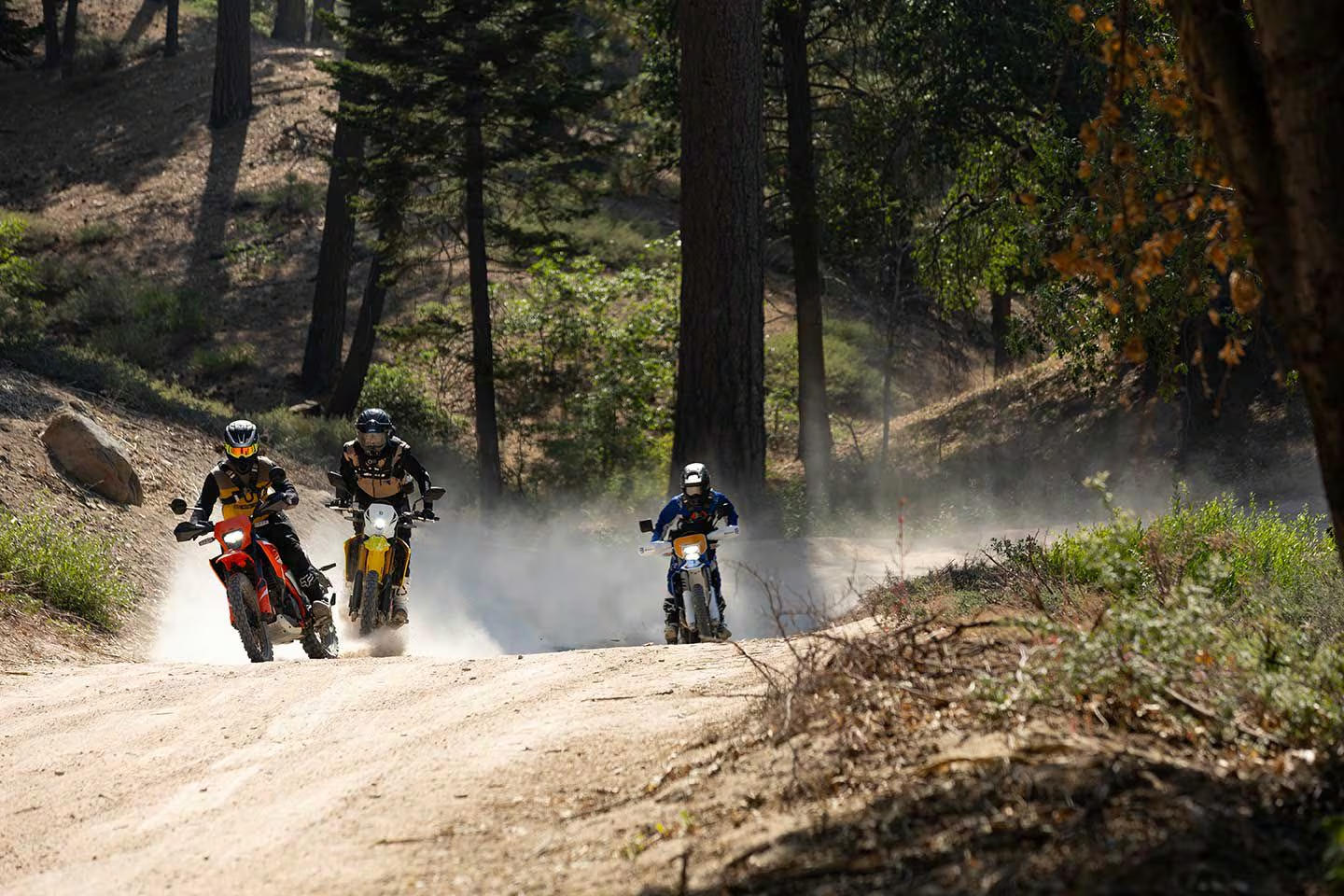
KTM 390 Enduro R vs Suzuki DR-Z4S vs Husqvarna FE 350s.
In the early days of motorcycling, every motorcycle was a dual sport. Riders had one bike, and rode it on any surface they pleased (or had too!). But as technology evolved and speeds increased, motorcycles became more focused and purpose-built. And satisfying as bikes that fit neatly into street or dirt segments are, the freedom of a bike that can ride on or through any terrain is one of motorcycling’s best experiences. Street-to-dirt ratios vary across a fairly wide spectrum, but manufacturers call these bikes the same thing: dual sports. We call them jacks of all trades.
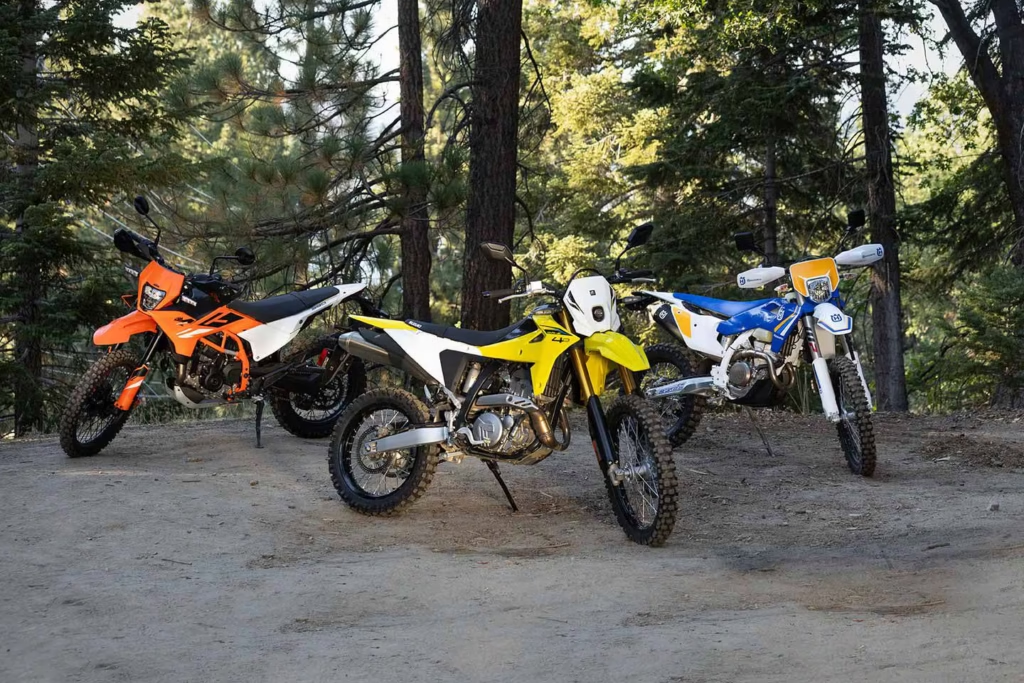
There is an abundance of solid dual sports from many manufacturers, but in the lightweight sub-400cc category, we chose three recent standouts: Suzuki’s reimagined DR-Z4S, KTM’s all-new 390 Enduro R, and Husqvarna’s tried and true FE 350s. Each bike offers something different to those shopping for a single-cylinder all-surface moto. This comparison is as much about your riding mission as it is about relative performance.
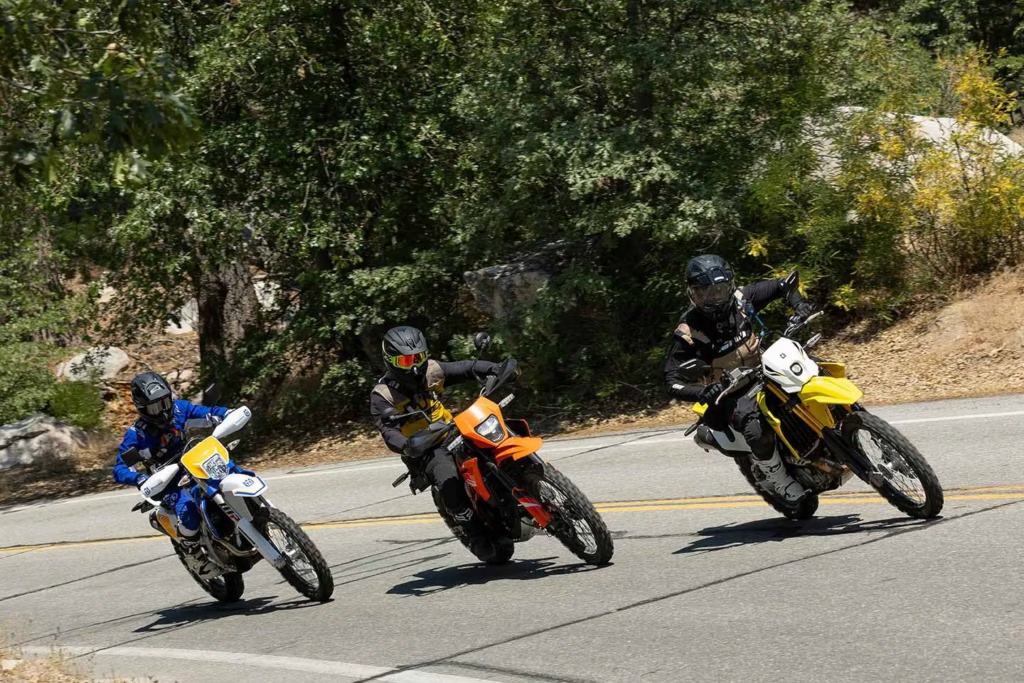
In some ways, these bikes are remarkably similar: The Suzuki, KTM, and Husqvarna are separated by just 49cc and 5 horsepower. But they are different in one big way: a spread in MSRP by $7550. The three are drastically different but aim to deliver the same goal: a motorcycle that seamlessly transitions from pavement to dirt.
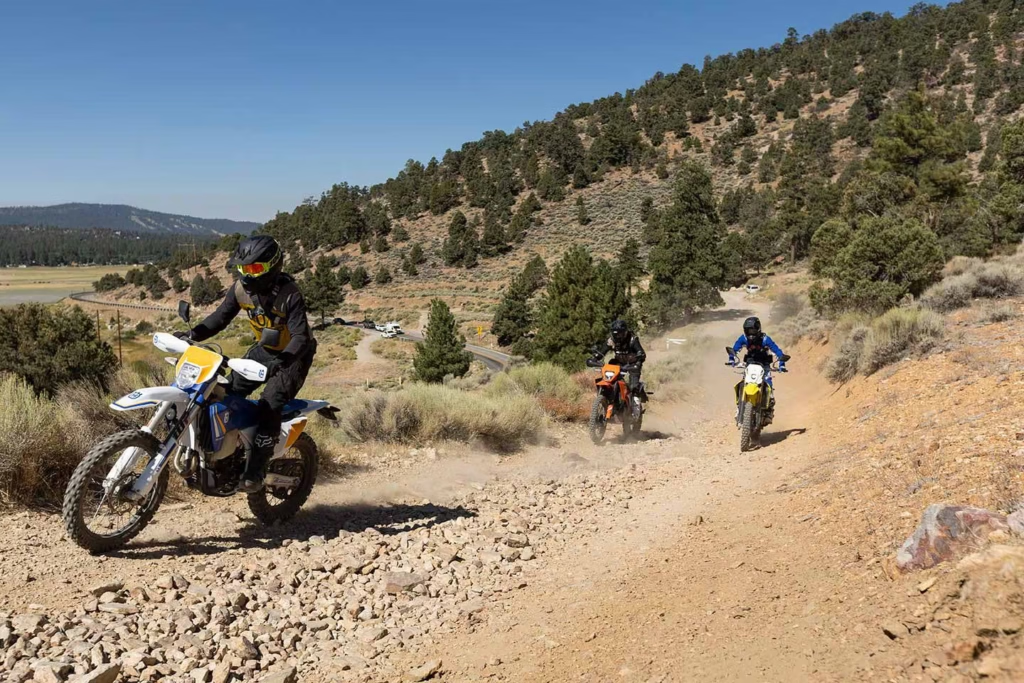
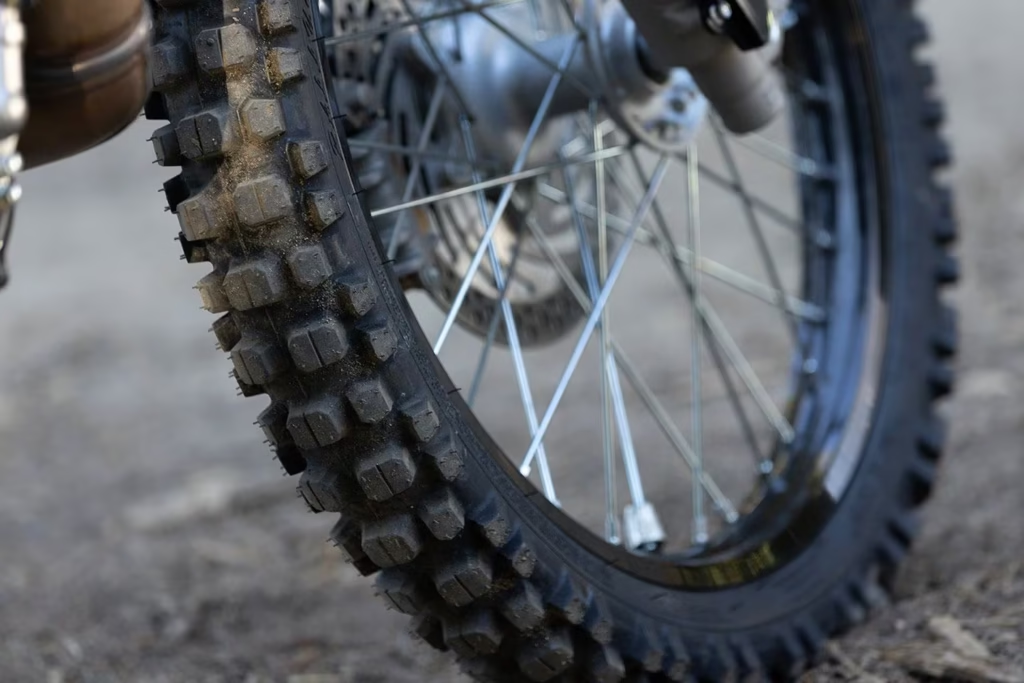
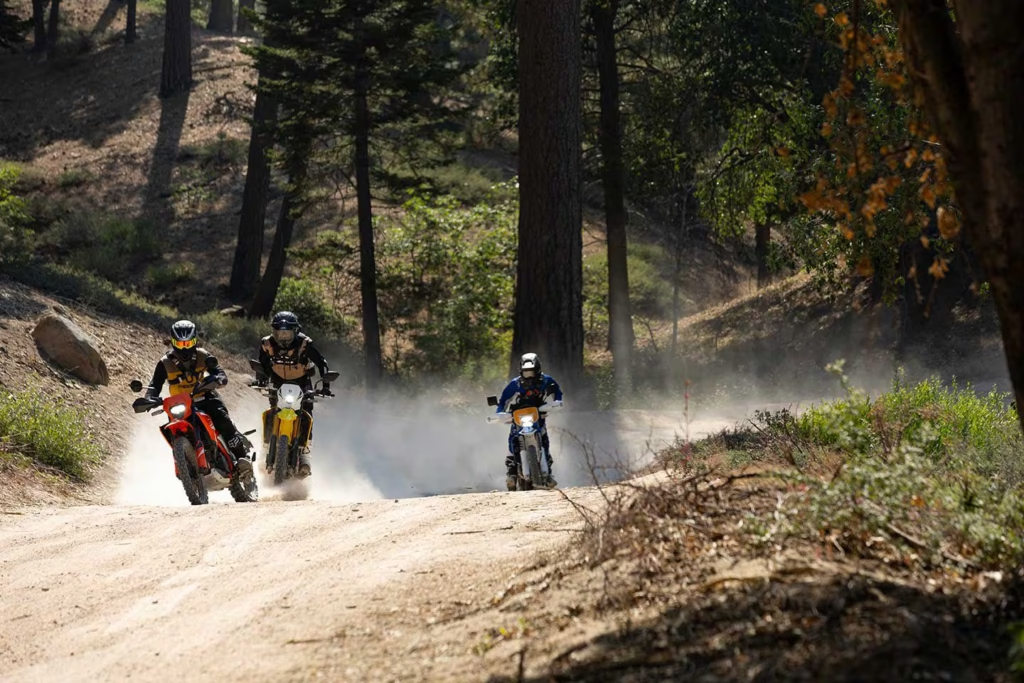
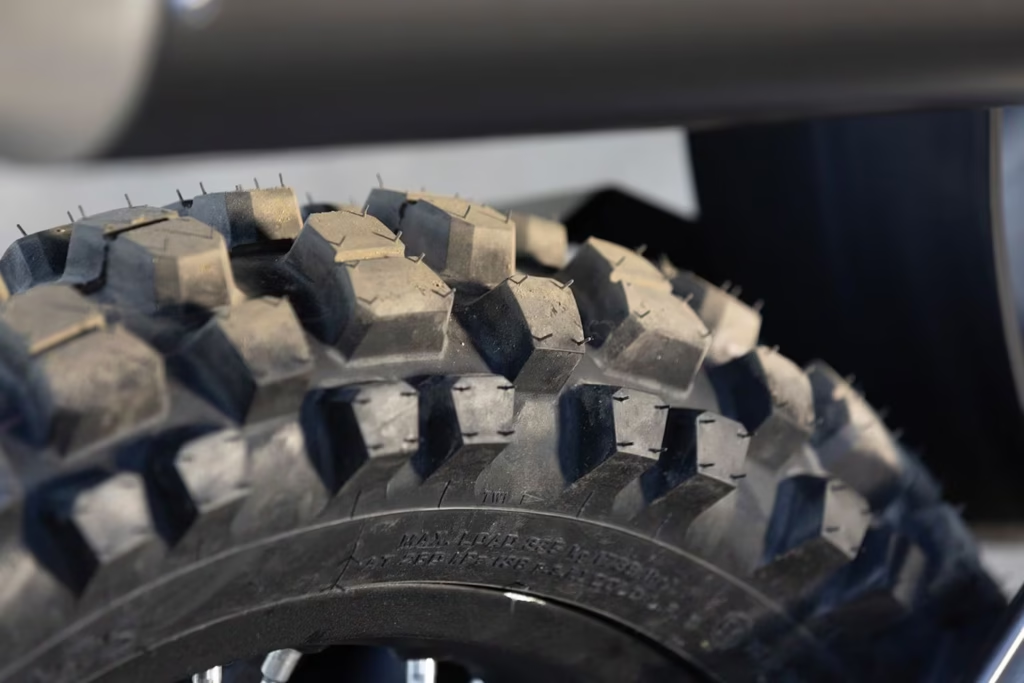
Among the KTM 390 Enduro R, Suzuki DR-Z4S, and Husqvarna FE 350s, which bike is closest to the magic point where value, versatility, and performance intersect to coincide with your needs? To find out, Editor-at-Large Blake Conner,Adam Waheed, and I mounted a fresh set of Pirelli MT21 tires on all three bikes for parity and pointed them toward the mountains of Southern California, where the pavement ends.
Showroom Floor Showdown
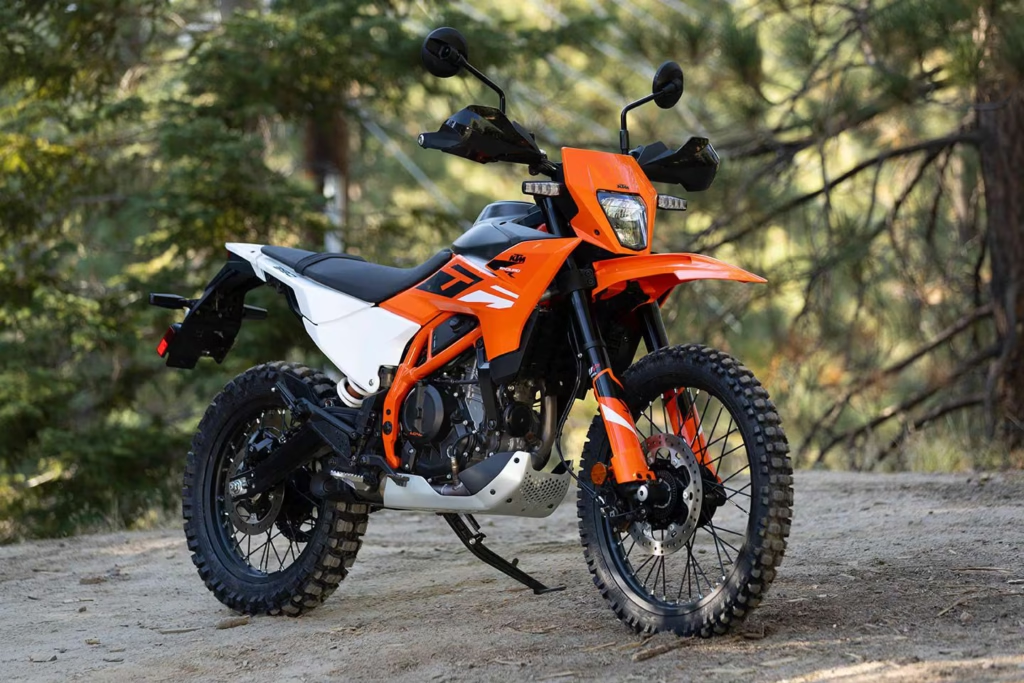
KTM’s 390 Enduro R is the latest addition to the dual sport segment. This completely new bike utilizes cross-platform sharing with the 390 Duke to deliver a rider-aid-equipped streetable dual sport. Ringing in at $5499, the 390 is the lowest priced in this test by $3500.
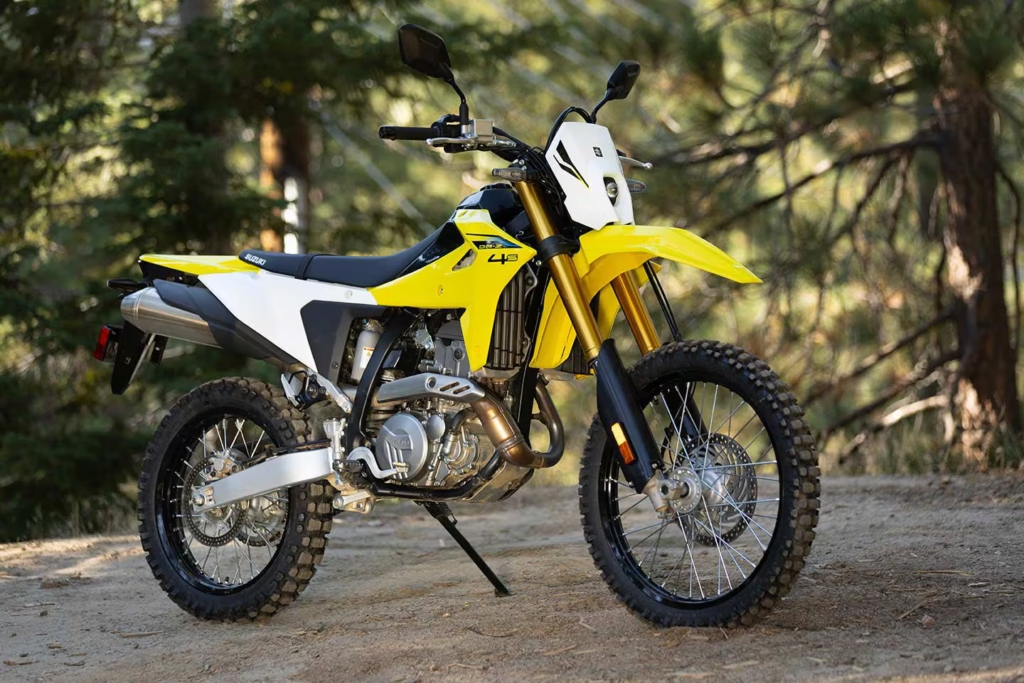
Suzuki completely overhauled its longstanding dual sport, the DR-Z400, with a new engine, chassis, and electronics package. The DR-Z4S is the most refined, feature-rich version of the brand’s legendary single-cylinder dual sport yet, but is now Suzuki’s flagship in the class at $8999. When the DR-Z400S debuted in 2001 MSRP was $5449; adjusted for inflation to 2025 dollars that is $9959.
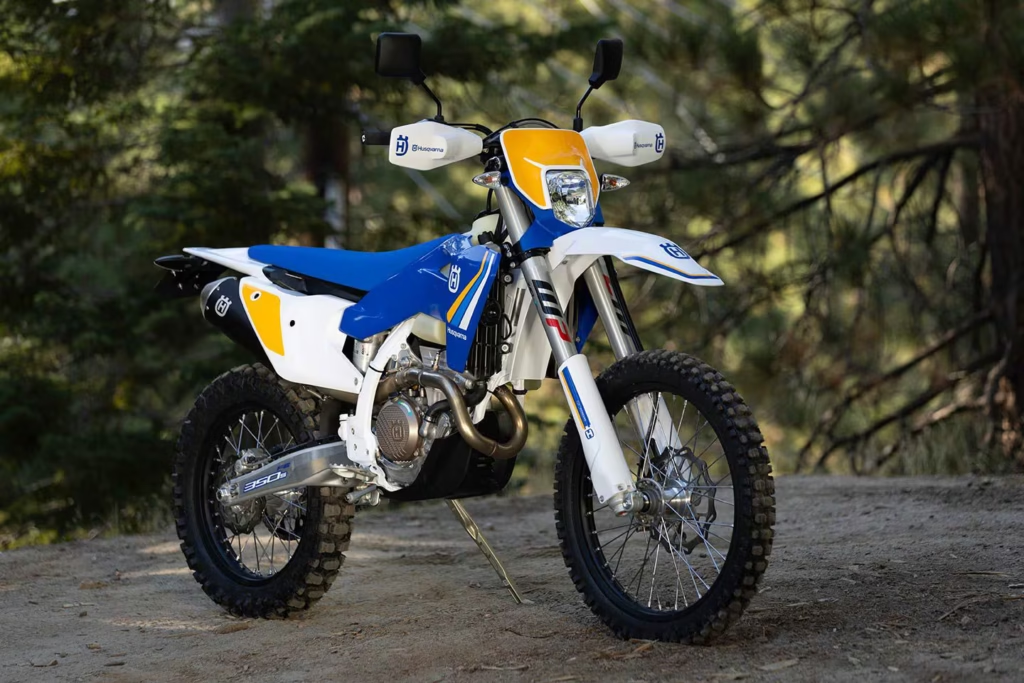
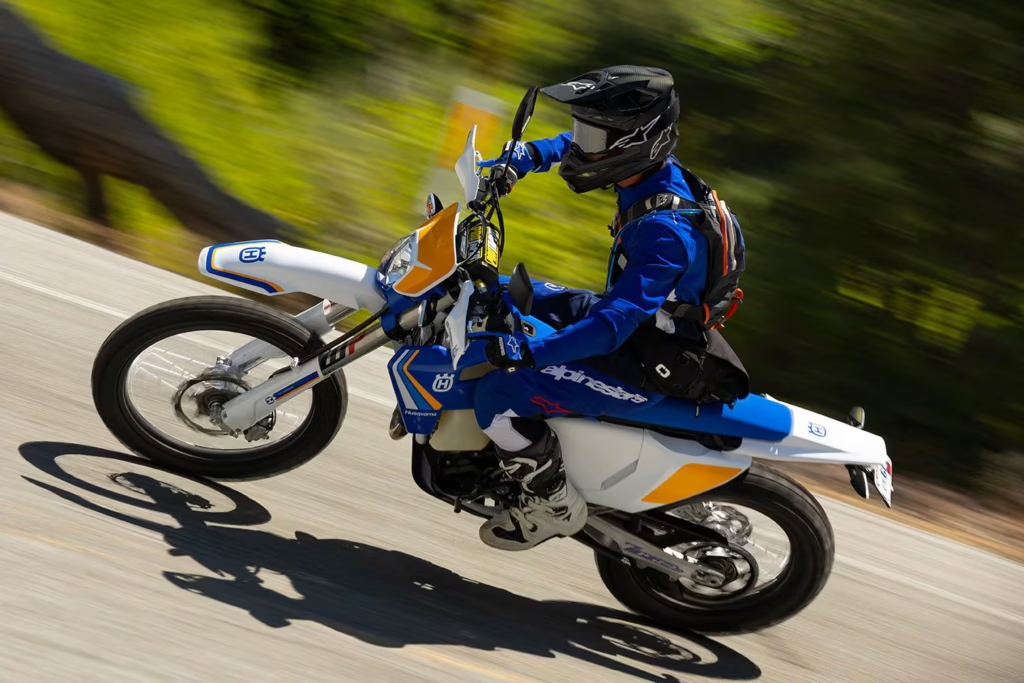
And Husqvarna’s FE 350s is a high-performance dual-sport rooted in the company’s competition dirt bikes. In fact, many of the parts are interchangeable between the motocross bike and this dual sport. The FE 350s has been updated with a new engine and chassis, and that performance comes at a top-shelf price of $13,049.
KTM Engine
Despite the bikes being different in terms of use case, design, and price, they all have similar engine layouts and make similar horsepower: DOHC liquid-cooled, fuel-injected singles putting out rear wheel hp in the low-to-mid 30s.
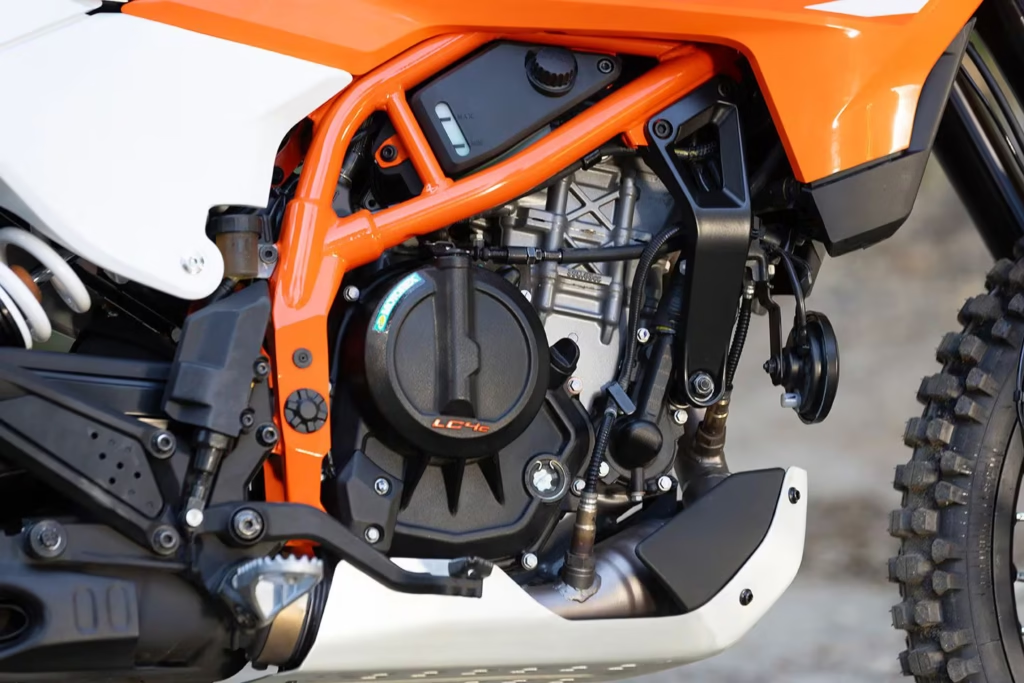
The 390 Enduro R utilizes KTM’s versatile LC4c engine, completely overhauled last year and debuted in the 2024 390 Duke. This new 399cc liquid-cooled single-cylinder engine is bumped up from the previous 373cc, and sends power through a six-speed transmission with a slipper assist clutch. It’s used across KTM’s range of lightweight bikes, including the 390 Duke, 390 SMC R, and 390 Adventure R. The powerplant is mostly unchanged from model to model other than engine-management mapping and final-drive gearing. The 390 Enduro R uses a 48-tooth rear sprocket.
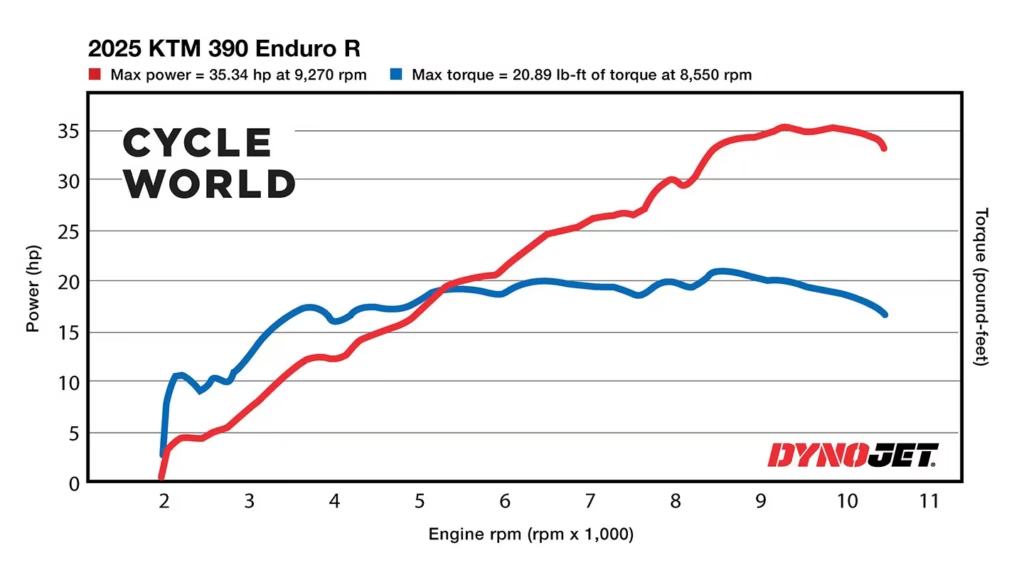
On the Cycle World in-house dyno, the 2025 KTM 390 Enduro R produced 35.3 hp at 9270 rpm and 20.9 lb.-ft. of torque at 8550 rpm.
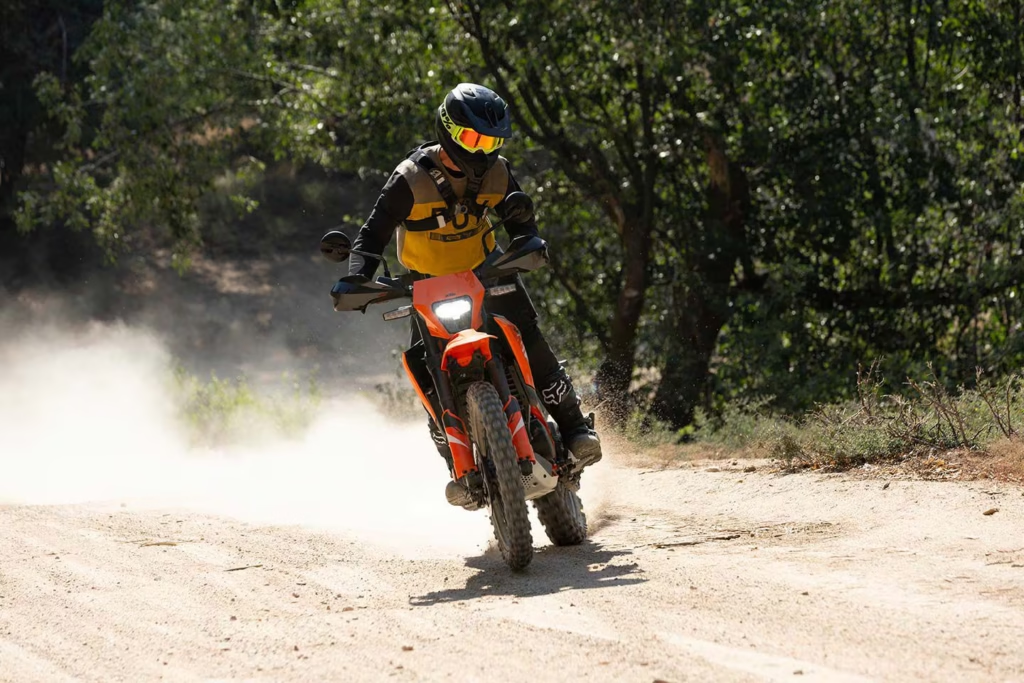
KTM’s LC4c engine is entertaining and rewarding. It revs quickly and pulls through the gears aggressively, thanks to the engine delivering its best power at high rpm. Combine those characteristics with the accessory quickshifter and a flowing fire road, and the 390 Enduro R can hold its own with the Suzuki and Husqvarna. When the trail tightens and becomes more technical, tall gearing and the lack of low-end torque, in combination with the most weight in this test (we will talk about that more later), make the KTM’s engine the hardest to manage.
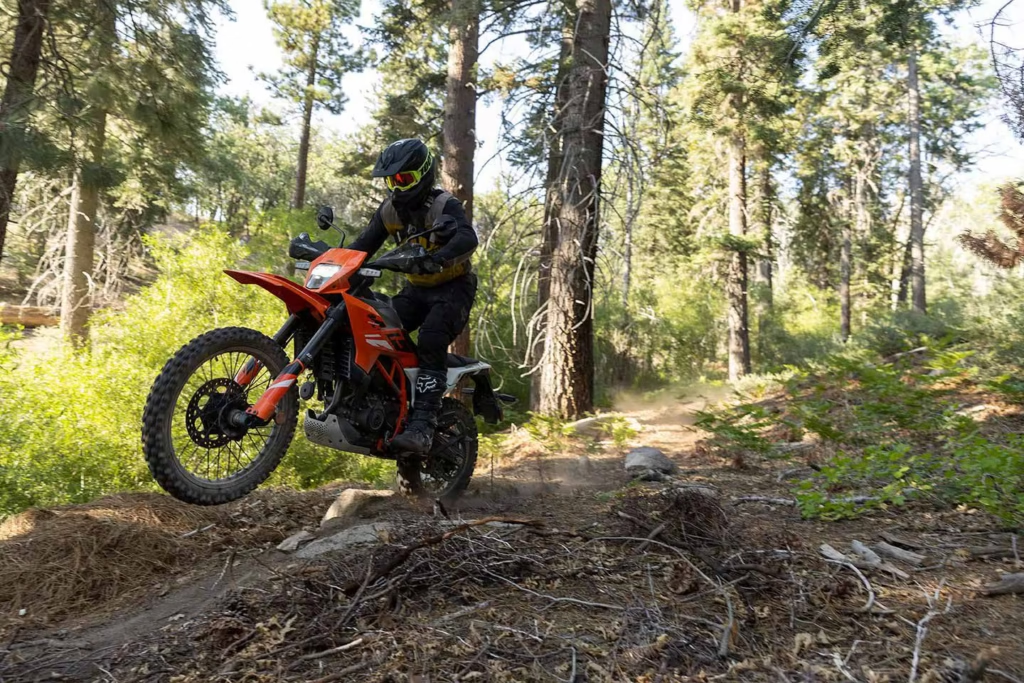
“The 399cc single-cylinder engine thrives on revs,” Waheed explains. “It spins up quickly, delivering a lively, eager character that encourages riders to keep it on the boil. The trade-off is felt in the low-end torque curve, which is softer than ideal for slow-speed technical riding.”
Conneragrees, saying, “The power delivery makes you work for it. Bottom-end power is pretty soft, while the midrange is also a bit lacking. This engine doesn’t really wake up until you get into the upper rev range, which is fine on the street, but in the dirt you really have to keep the revs up to get the most out of it.”
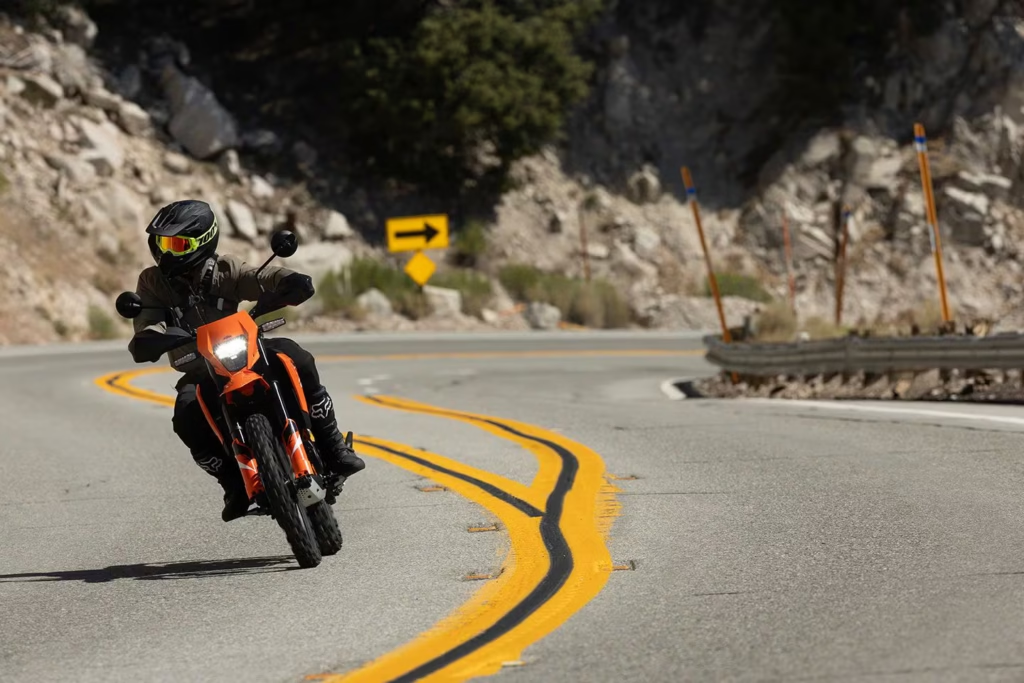
On the street, the KTM shines. It’s based on the 390 Duke, which serves as a great platform for commuting and carving up canyon roads. The top-end power and tall gearing allow the KTM to reach triple-digit speeds—the only bike in this test able to do so. Whether you are on the highway passing a car, or ripping off an apex on a mountain road, the KTM delivers the best roll-on power at high speeds. But out of the three bikes, the KTM 390 Enduro R produces the most buzz and vibration, followed closely by the Husqvarna. The Suzuki offers the least vibration.
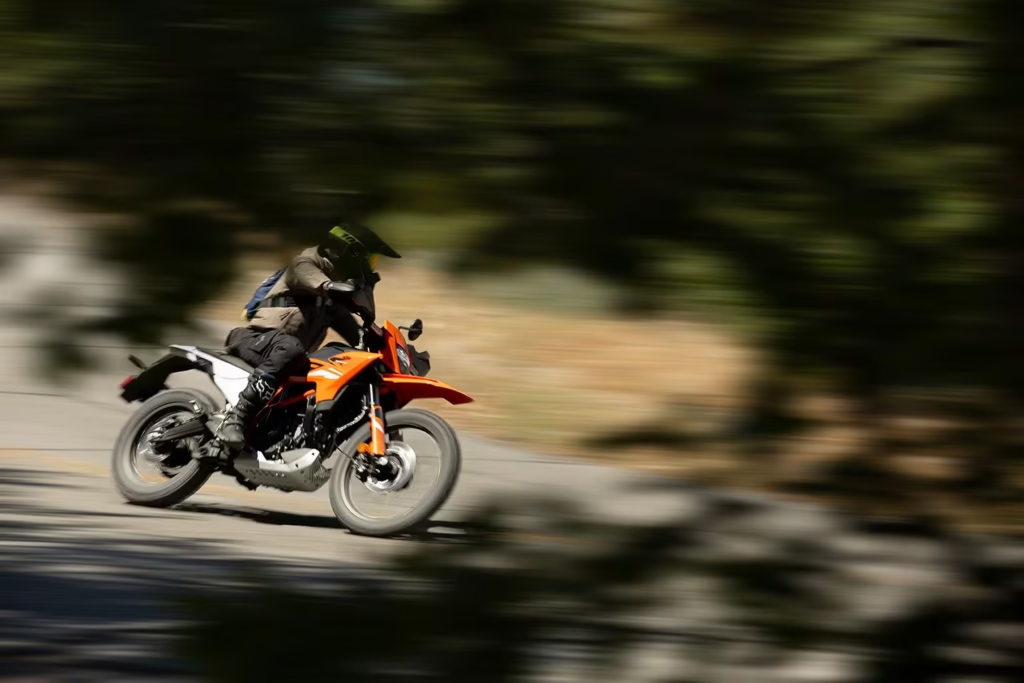
Suzuki Engine
Suzuki performed a major overhaul of its long-in-the-tooth 398cc DOHC liquid-cooled single with a new cylinder head with reshaped intake ports, updated valve timing, and fuel injection. A five-speed transmission remains, but it too has been updated to reduce oil windage and improve strength.
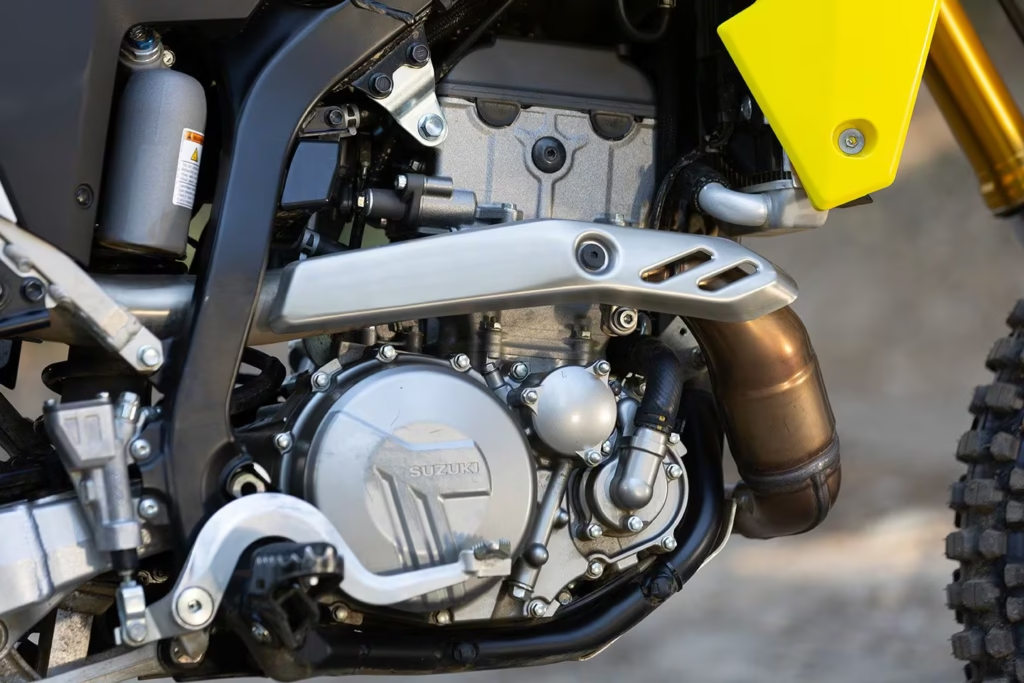
On the Cycle World dyno, the 2025 Suzuki DR-Z4S produced 33.5 hp at 8120 rpm and 23.9 lb.-ft. of torque at 6610 rpm.
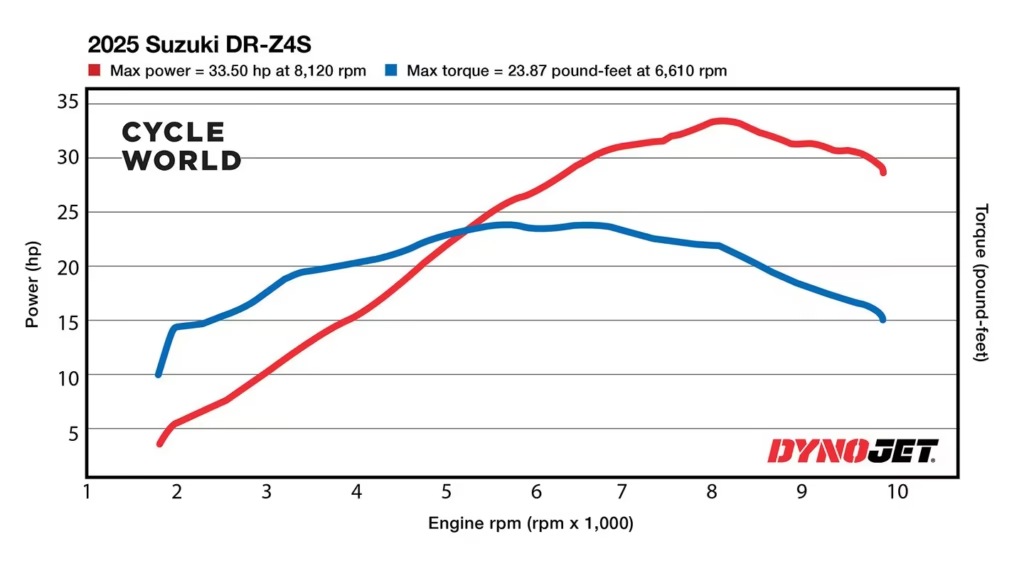
The Suzuki engine’s character is essentially the opposite of the KTM. The DR-Z is slow to rev with chuggable low-end torque and a strong midrange, making it easy to ride in technical terrain. The top-end power isn’t as strong as that of the competition, but you can still hold off a shift and run the engine up to the rev limiter to connect corners. When you’re really screaming the engine, the DR-Z is operating outside its pleasing midrange sweet spot and loses punch. Vibration also increases through the footpegs and handlebar. Ride it where it’s happy and you’ll be happy too.
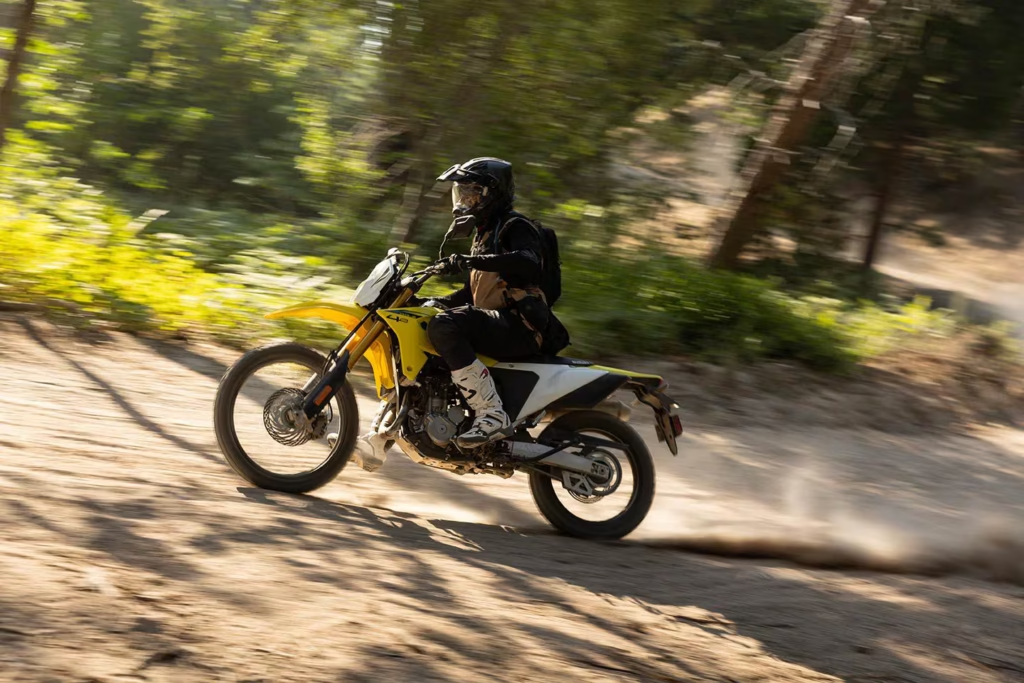
“Power delivery on the DR-Z4S is immediate and engaging right off idle,” Waheed says. “The 398cc liquid-cooled single-cylinder engine comes alive with strong low-end torque, making it easy to crawl through technical off-road sections or pull away cleanly from stoplights in town. It’s not explosive, but it’s broad, linear, and effective.”
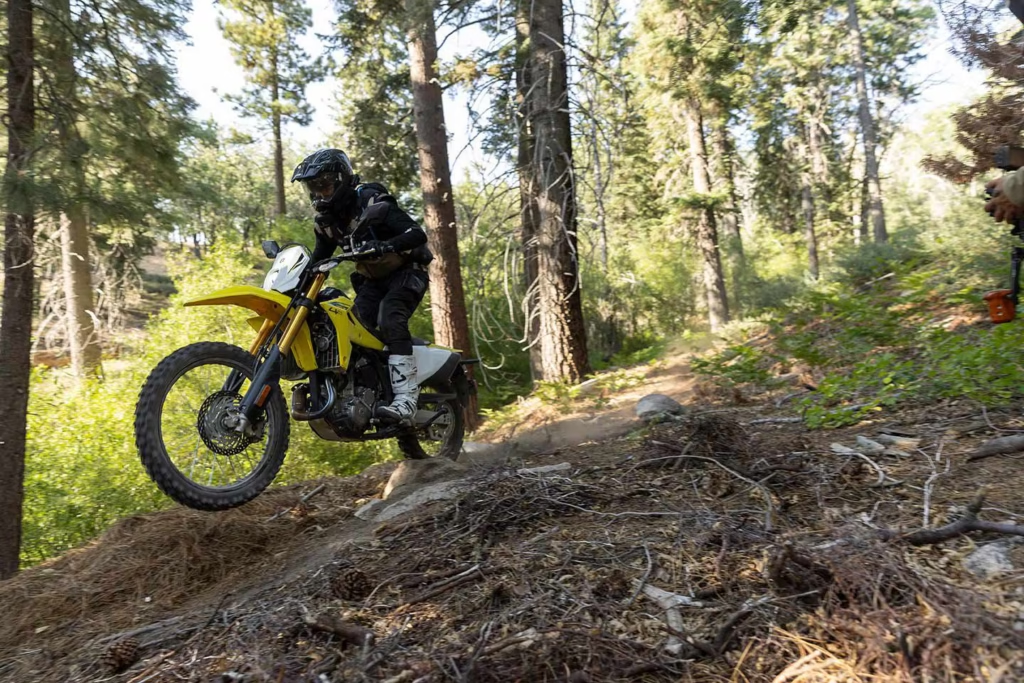
Around town, off-road, or on a tight mountain pass, the Suzuki’s five-speed transmission works well, but once speed exceeds 65 mph, the DR-Z4S starts to run out of legs. Keeping the throttle pinned will slowly creep the speedometer to 90 mph, but the DR-Z still is not a great highway companion. Below 65 mph, the DR-Z4S works great and its combination of gearing and torque give it excellent response. Compared to the KTM, the Suzuki can ride a gear higher through the same section and deliver more roll-on power to drive out of a corner or up a hill.
“The assist-and-slipper clutch deserves credit too,” Waheed says. “Lever effort is light, which reduces fatigue in stop-and-go traffic or during long trail rides. The slipper function smooths out aggressive downshifts, keeping the rear tire composed even if you get a little ham-footed with the shift lever.”
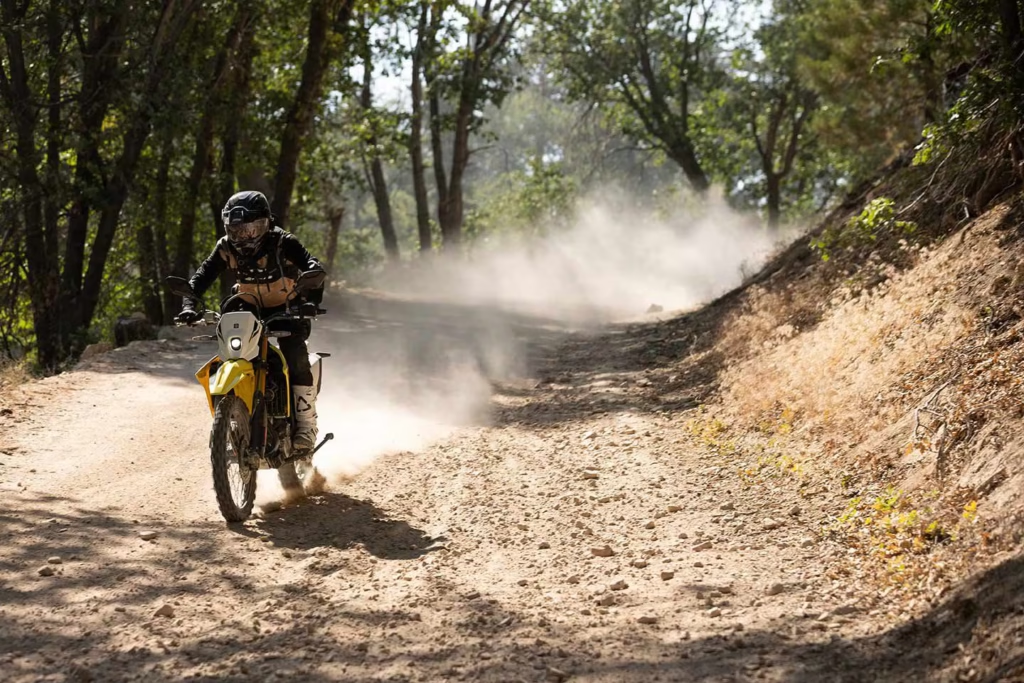
In an urban environment, the DR-Z is great. The lighter clutch pull and assist function make it the easiest bike to leave a stop, and its torque-rich character gives it exciting muscle to move down the road. But again, once the speed exceeds about 65 mph, in stock form the DR-Z becomes inferior to the long-legged KTM.
Husqvarna Engine
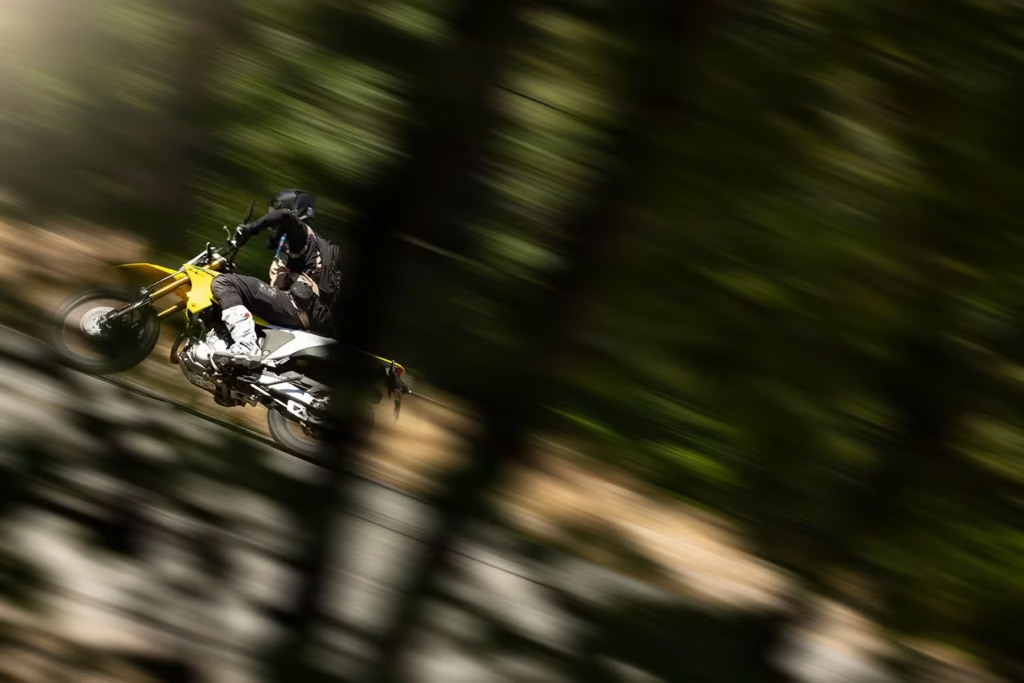
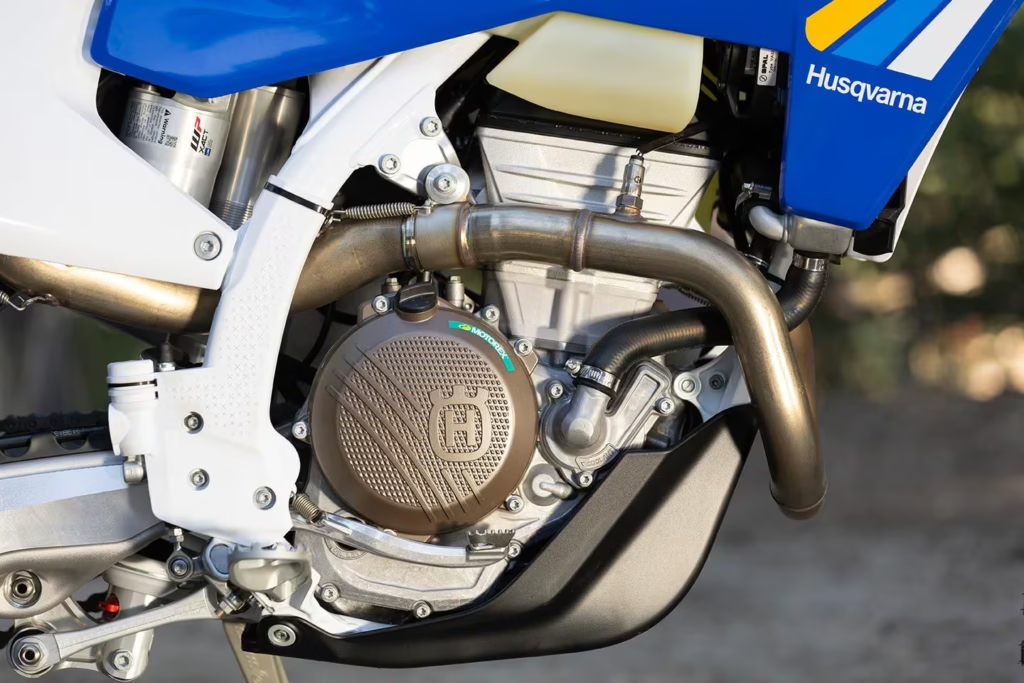
The 2025 Husqvarna FE 350s uses the 349cc DOHC liquid-cooled single from the FC 350 motocross bike, which has been homologated for street use with a lower 13.7:1 compression ratio, a smaller 44mm throttle body, and a 50-state-legal exhaust with spark arrestor. It’s the sportiest engine in the test with a Pankl Racing Systems six-speed transmission, a 13,000-rpm rev limiter, and a Brembo hydraulic clutch.
On the Cycle World dyno, the 2025 Husqvarna FE 350s produced 30 hp at 7800 rpm and 20.3 lb.-ft. of torque at 7300 rpm.
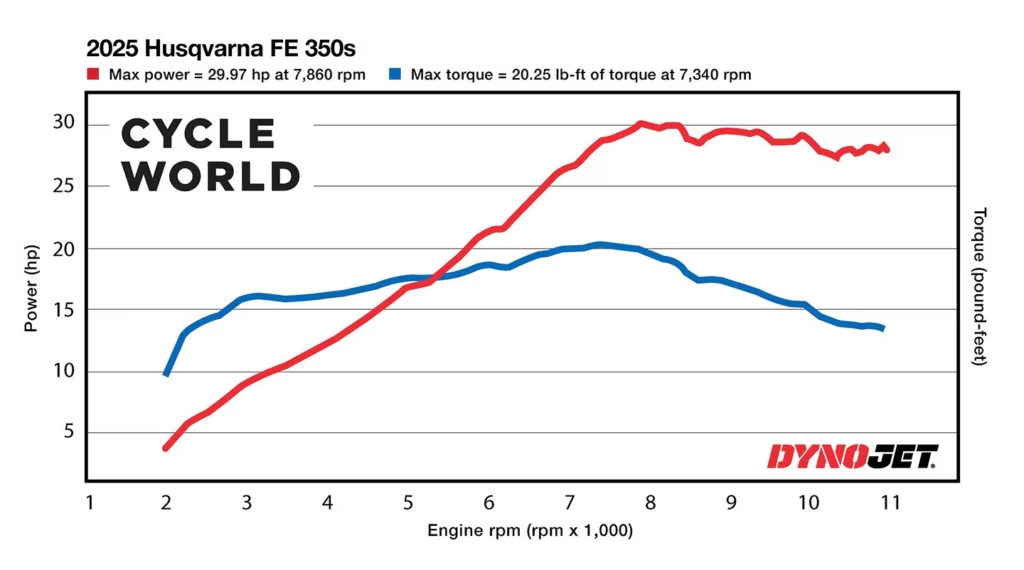
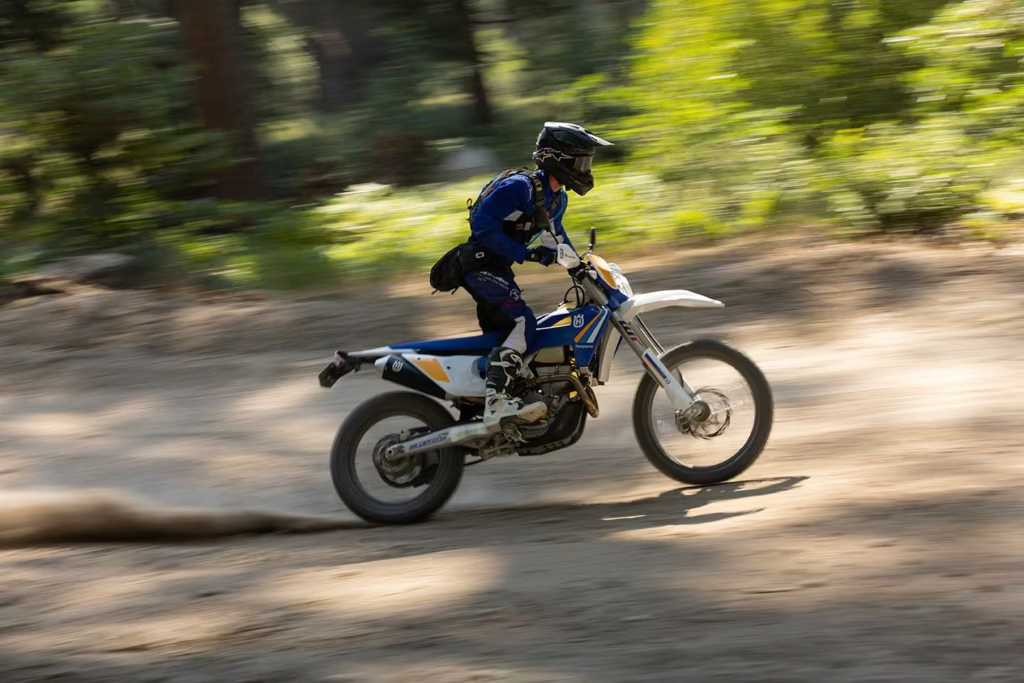
The Husky is not as explosive as the Suzuki down low or as strong as the KTM up top, but it makes the most usable power throughout the entire rev range. At low speeds, power delivery is direct and tractable. The engine has an amazing ability to lug, but can also be turned up to 11 with a quick flick of the clutch lever. As speeds increase, the 350 engine has a responsive midrange that becomes increasingly exciting as revs climb.
The transmission shifts great, and the clutch has a light pull with positive engagement, but the FE has a lot of vibration. Whether you are commuting across town or on the connecting trails, the FE 350s is constantly buzzing.
“It’s got surprising torque and bark, often feeling stronger than the 400-class motors in both the DR-Z4S and the KTM,” Waheed offers. “That said, it does come with a noticeable amount of vibration—less than the KTM 390 Enduro R, but more than the smooth-running Suzuki.”
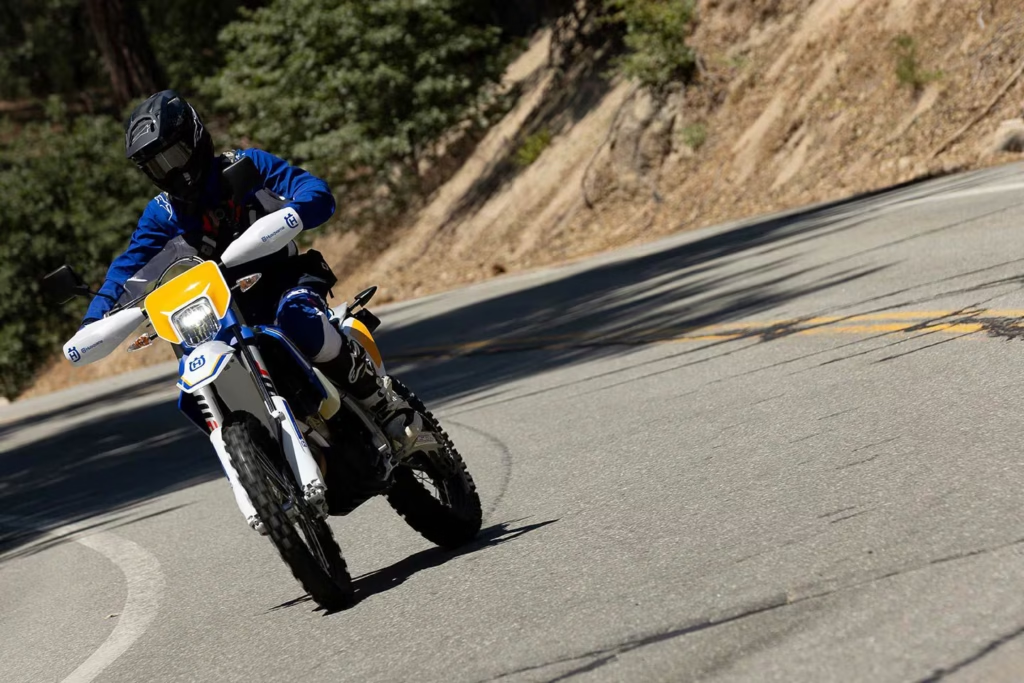
On surface streets or twisty backroads, the engine is exciting at low speeds and comfortable at cruising speeds, but is outgunned in the fastest moving traffic. On the highway, the Husqvarna struggles to keep the pace of surrounding California drivers and doesn’t offer much passing power. In fact, at full throttle in sixth gear, the Husqvarna runs out of legs near 80 mph. Taller gearing will raise top speed, but will also affect the 350’s luggability off-road. It’s geared this way precisely because of its off-road focus.
“The engine makes power everywhere, offering a lot more midrange performance than anticipated,” Conner says. “If you really want to get the most out of it, revs are your friend, but when riding technical off-road sections it’s got surprisingly good power delivery at lower revs.”
KTM Electronics
The KTM features a 4.5-inch TFT display that provides access to the ride modes (Street, Off-road), switchable traction control, and adjustable ABS, along with other features such as smartphone connectivity and a USB-C charging port. Our bike was fitted with the accessory bidirectional quickshifter—a $274 option.
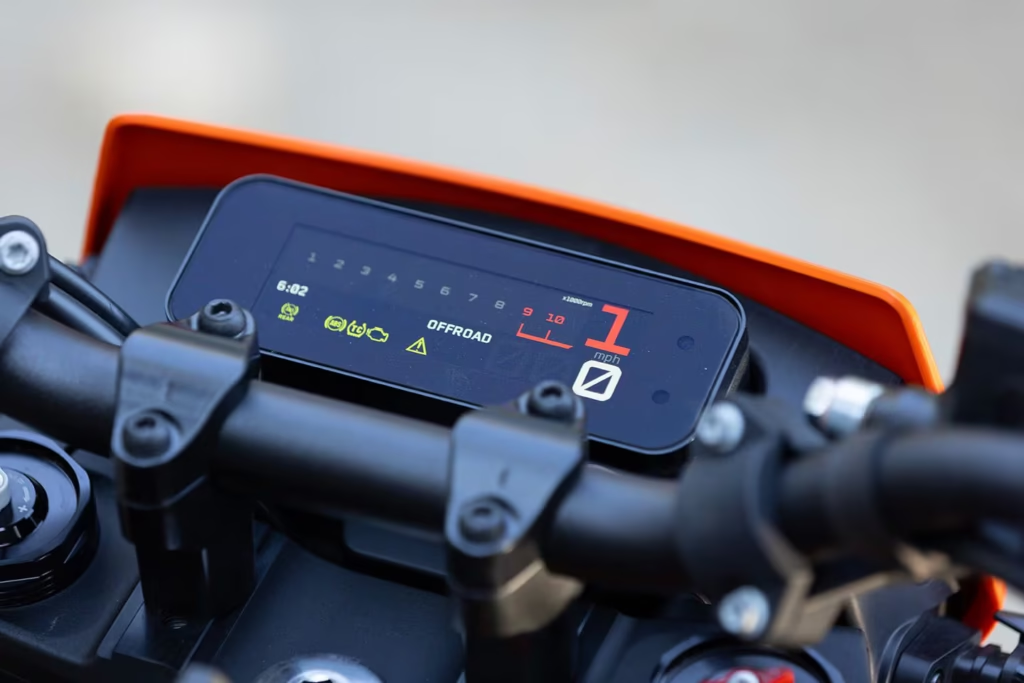
The KTM’s electronic suite is easy to navigate, and the dash is sharp. All rider aids can be fully disabled. Switching between modes noticeably changes the bike’s power delivery, and the ABS system goes undetected on the pavement. But with fairly aggressively knobbed Pirelli MT21 tires we chose for the test, the street traction control calibration is too intrusive for road use, which makes sense. With traction control dialed back to the off-road setting, the system doesn’t trigger on the pavement. It’s amazing to have a comprehensive rider suite on a bike that costs $5499. It may not have been completely dialed in for use with aggressive knobby tires, but if you’re getting aggressive on knobbies, you have the flexibility to turn off rider aids.
Suzuki Electronics
The new DR-Z is equipped with Suzuki’s Intelligent Ride System, providing access to three power modes (A, B, C), three levels of traction control (1, 2, Gravel), and two levels of ABS (active at both wheels or active only at the front wheel). Riders can also fully disable ABS at both wheels for zero intervention. The LCD display and Suzuki Drive Mode Selector are simple to navigate and allow riders to change settings on the fly.
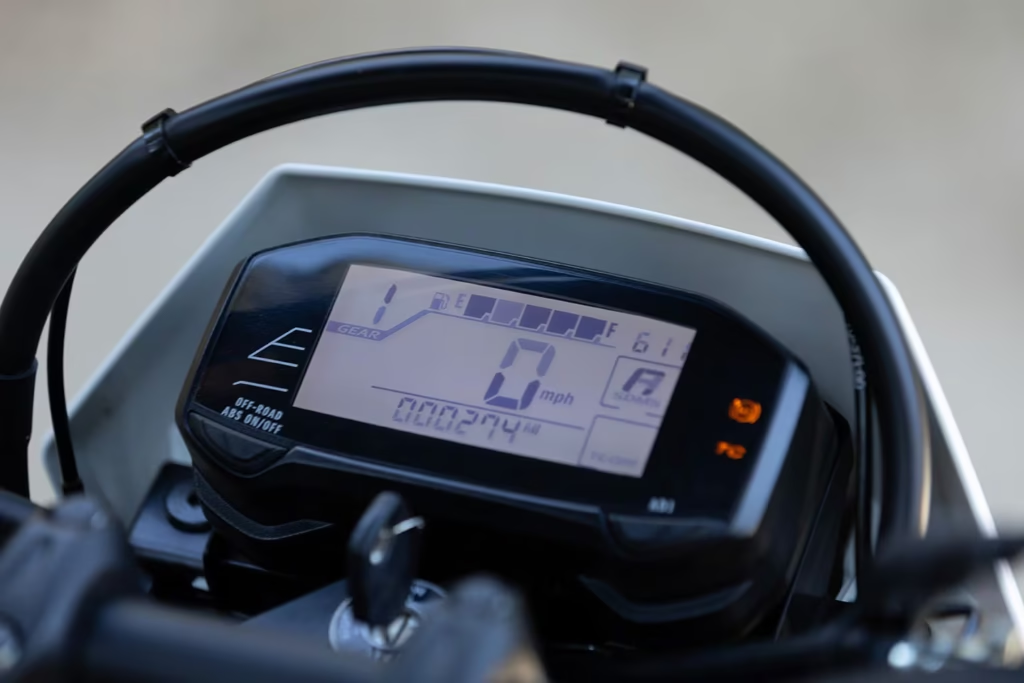
“Navigating the modes and screen is the best of the three,” Conner says.
Switching between the three throttle modes makes a noticeable difference on the Suzuki. Riding at altitude, we spent most of our time in the most aggressive A mode with traction control turned off. B mode is sporty as well, but doesn’t offer the same aggression at low rpm. And C mode is reserved for rainy days and beginners. The DR-Z’s Gravel traction control (G) works well as a rider aid and is not a limitation. In G mode, riders can throw roost, slide corners, and pop wheelies while benefiting from the added assistance of traction control.
“The system is well-tuned, with each mode offering a noticeable but not jarring change in character,” Waheed says.
Husqvarna Electronics
The Husqvarna FE 350s is completely absent of rider aids. Unlike Husqvarna’s FC 350 motocross bike, the FE isn’t offered with a map switch, a quickshifter, or traction control due to emission regulalations. But the FE 350s offers features such as toolless suspension clickers, toolless air filter access, Pro Taper handlebars, and ODI lock-on grips.
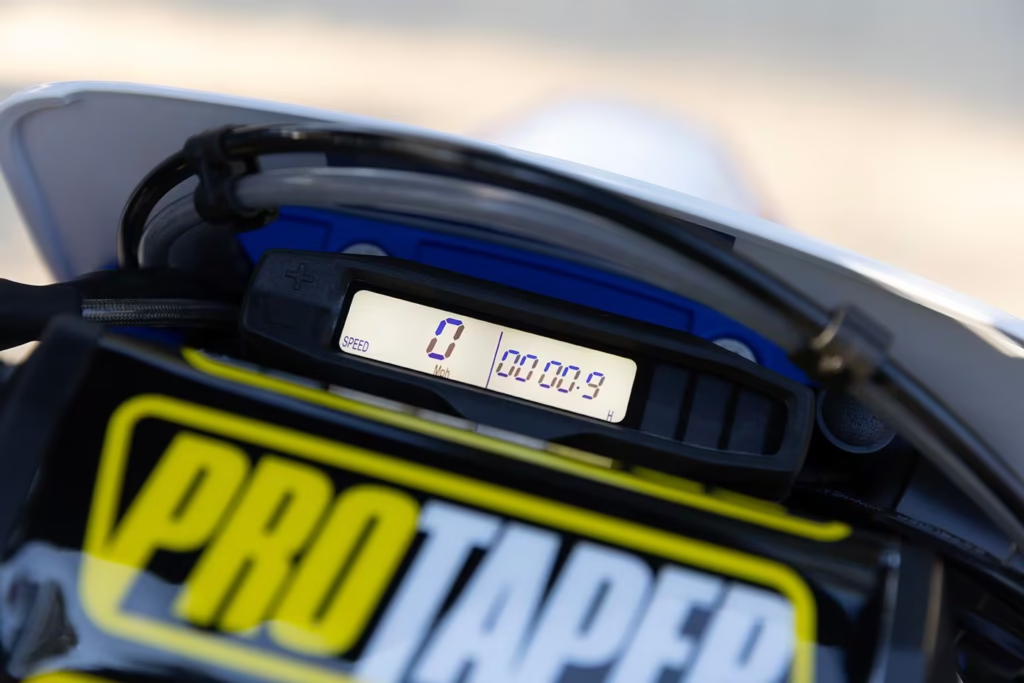
“There isn’t much here in the way of electronics, no modes to choose from and no means of controlling traction or braking other than with rider input, but that’s what most who buy this bike expect,” Conner says. “The dash is slim and simple, offering only the basics.”
Some riders may wish the Husqvarna FE 350s included a rider aid package like the Suzuki and KTM, but admittedly, Husqvarna’s target audience appears to clare less for TC, ABS, and ride modes than on all-out dirt performance.
Chassis and Handling
KTM
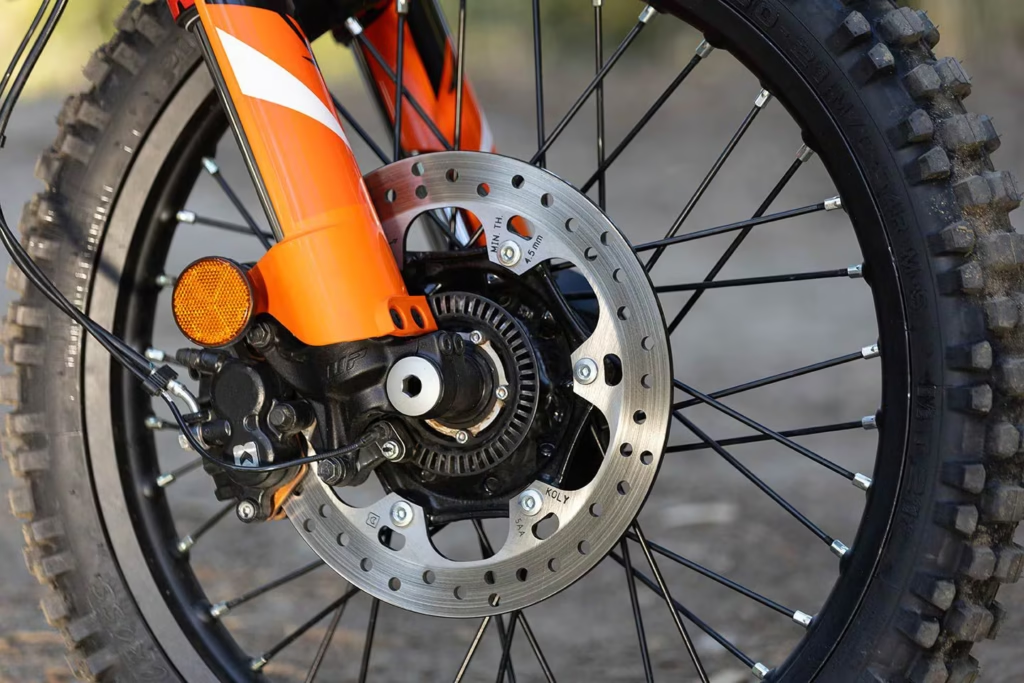
The Enduro R borrows its two-piece steel trellis frame from the 390 Duke, but it has been optimized for off-road riding with its own dedicated subframe and swingarm. KTM also moved the airbox up in the subframe, allowing the engine to mount higher in the chassis, increasing ground clearance to 10.7 inches while still maintaining a manageable seat height of 35 inches. One item we found annoying while riding standing up was how easily the rider’s boot could trigger the kickstand switch and cut the engine. KTM does provide a rubber band to hold the kickstand up and this mitigates the issue, but we’d like to see a more refined solution.
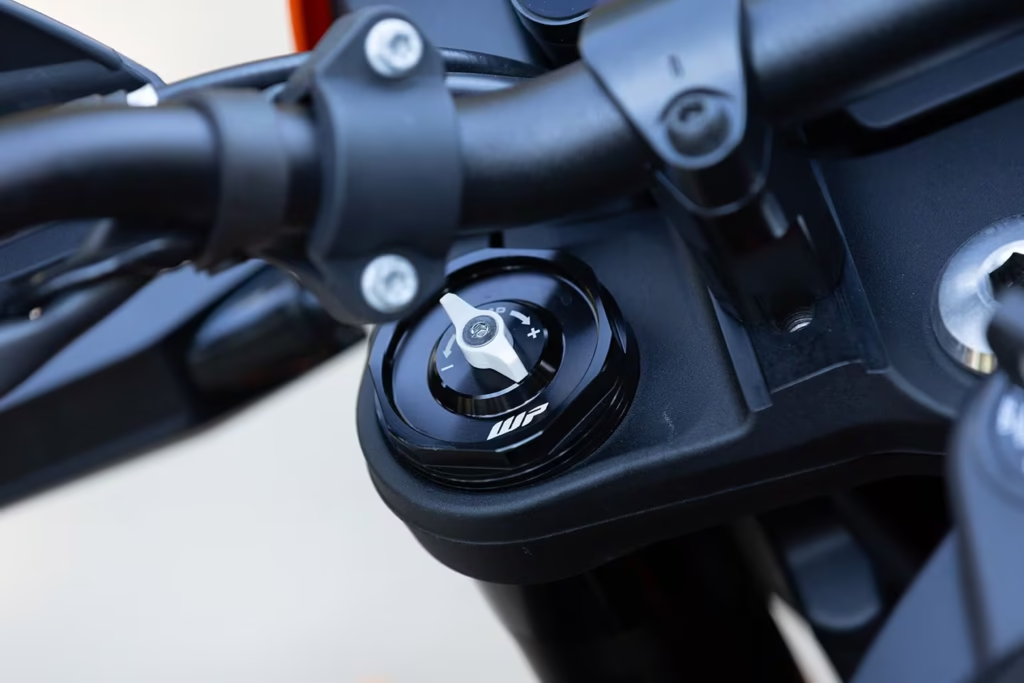
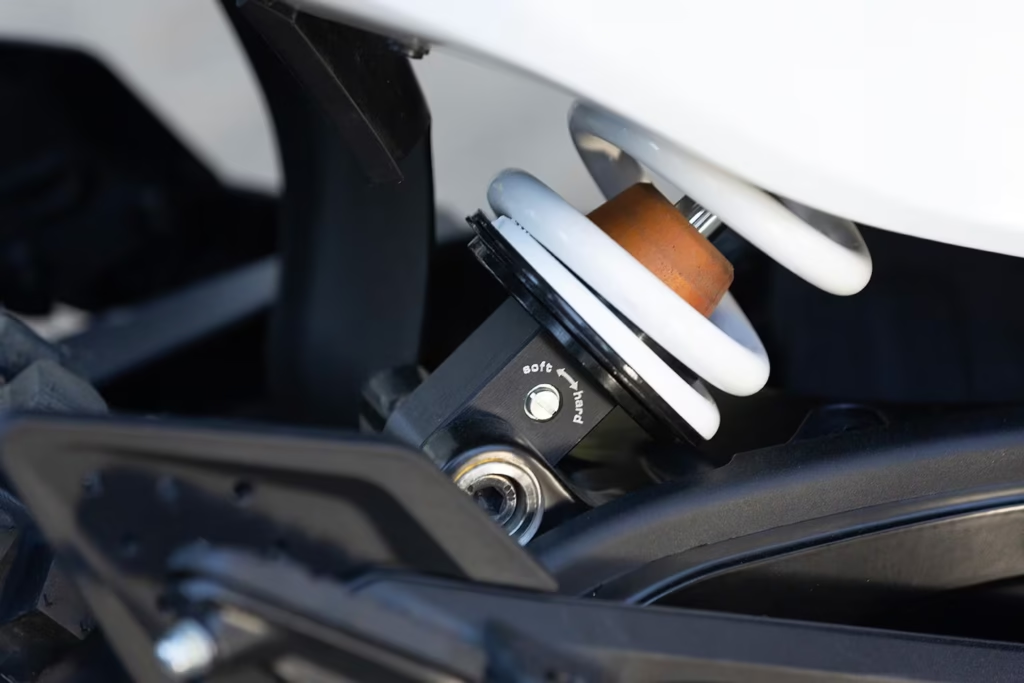
Steering geometry is more relaxed on the Enduro R compared to the 390 Duke, and the adjustable WP Apex suspension components are tuned for off-road riding and provide more than 9 inches of travel front and back. The 390 Enduro R features a moto-style seat similar to the one of the 690 Enduro R, has ByBre brakes, and comes equipped with Metzeler Karoo 4 tires.
This is a street bike adapted for the dirt, not a dirt bike adapted for the street like the Husqvarna, and that affects the bike’s overall weight and off-road performance. The KTM is 99.2 pounds heavier than the Husqvarna and 33.2 pounds heavier than the Suzuki. In the dirt, this makes the KTM harder to handle at slow speeds. With a little bit of momentum, the KTM’s weight is less consequential. On fire roads and fast two-track, the 390 Enduro is planted, and changes direction fairly easily. But when speeds decrease, and you’re muscling the KTM up a rocky ledge, its measured 351.6-pound dry weight (366 pounds fully fueled) does not go unnoticed.
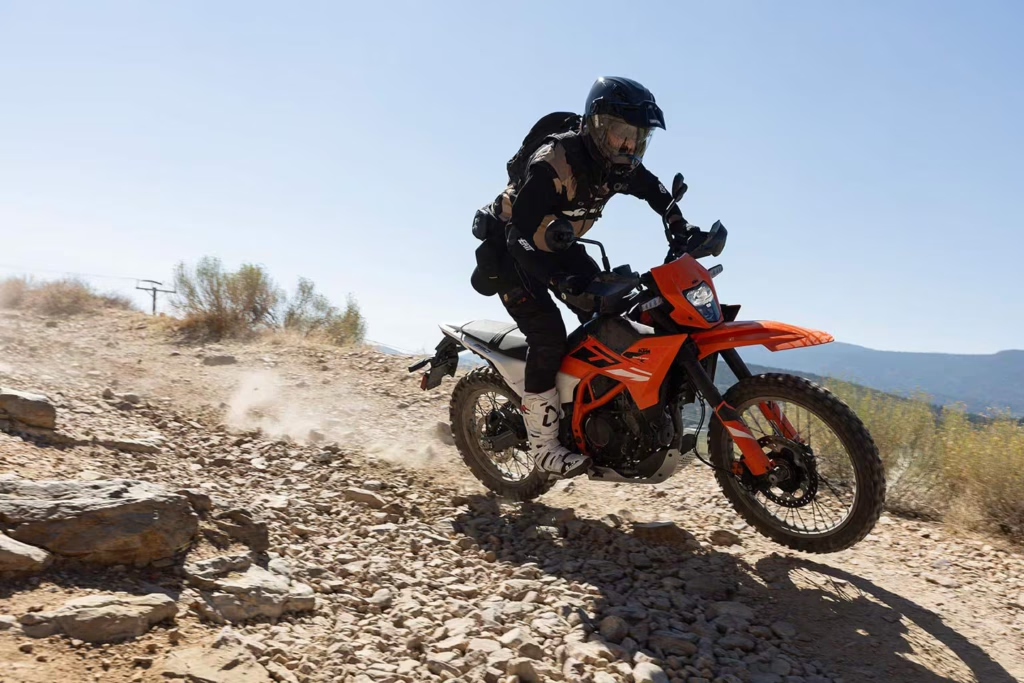
“The 390 Enduro R feels more agile than its weight suggests,” Waheed says.
“On small to medium bumps, the suspension is well-damped and keeps the chassis composed,” Waheed continues. “The limits appear when tackling larger hits or whooped-out terrain. Impacts tend to transmit through the chassis more abruptly, highlighting the cost-conscious nature of this setup. Riders coming from higher-priced enduro or adventure machines will notice the difference in refinement. Still, considering the $5499 MSRP, the suspension performance is more than adequate for casual dual-sport use, and it holds its own against bikes in this price bracket.”
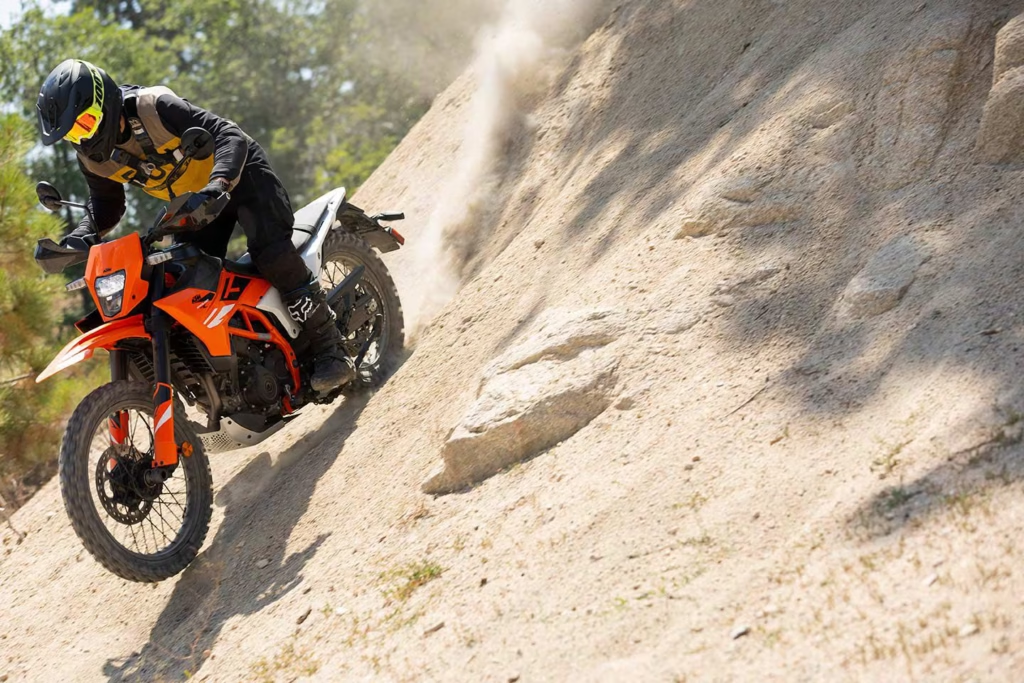
Exit the dirt and roll onto the pavement and KTM’s 390 is our bike of choice when riding home after a long day. With the lowest seat height and least suspension travel, the KTM is stable at speed and always feels hunkered to the ground. It doesn’t have the same side-to-side agility as the other two bikes, but once the bike is leaned over, it holds a steady line. The suspension is both supple and taut, offering a blend of comfort and performance on- and off-road.
“The chassis, like the engine, shows its relationship to the Duke,” Conner says. “It feels more like a naked adventure bike than a full-on dual-sport or off-road bike.”
Suzuki
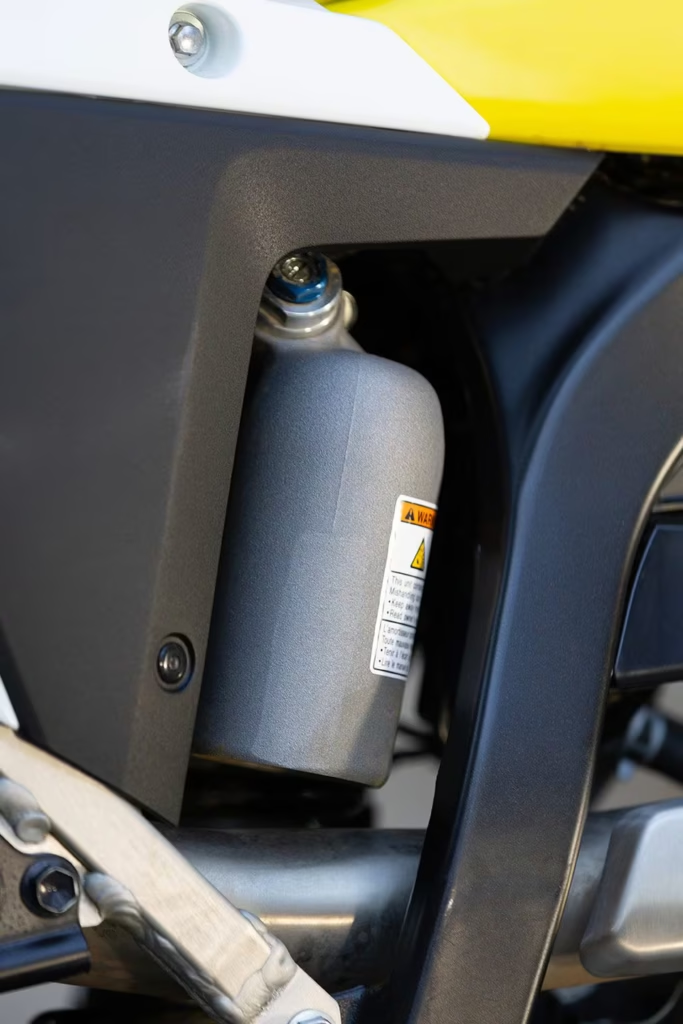
Suzuki completely overhauled the DR-Z’s chassis for this new generation. A new steel perimeter frame is lighter than the one it replaces, and it now uses KYB suspension components instead of Showa. A fully adjustable 43mm KYB inverted fork and KYB shock provide 11.0 inches of travel up front and 11.7 inches at the rear. The DR-Z rolls on a 21-inch front wheel and 18-inch rear wheel and is delivered stock with IRC GP-410AP tires. The brake system includes a 270mm front disc with a dual-piston caliper and a 240mm rear disc with a single-piston caliper.
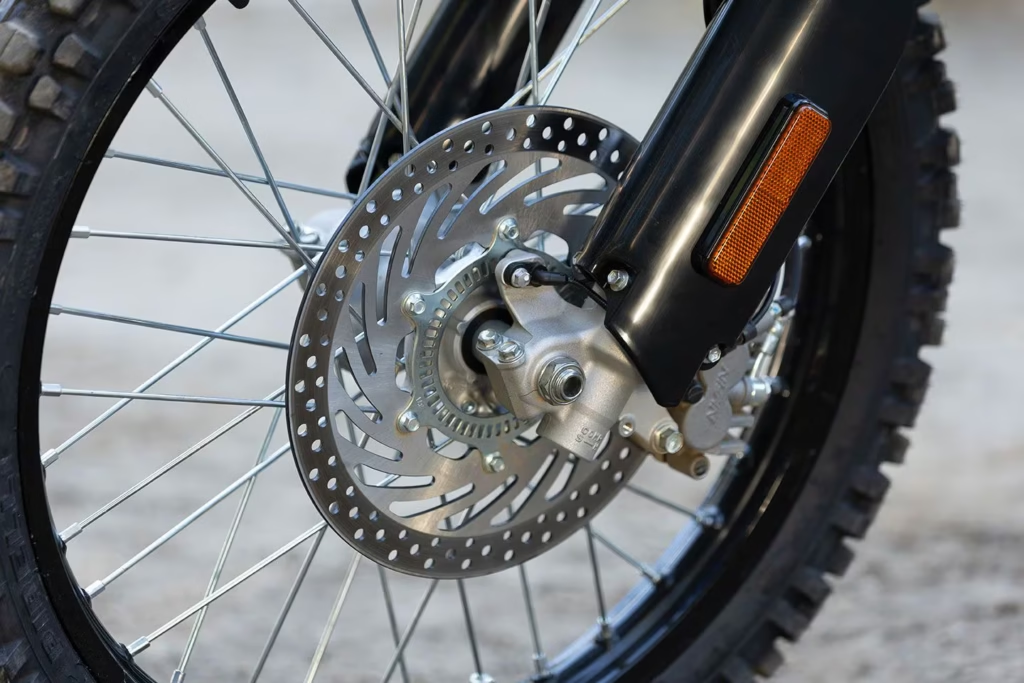
A new aluminum subframe is lighter than its predecessor, and the new aluminum swingarm boasts 9.3% more torsional rigidity. The DR-Z4s stores its engine oil in the frame with a dry-sump lubrication system. An aluminum tapered handlebar is mounted 1.1 inches higher than before, and the redesigned footpegs are slightly wider and mounted nearly an inch farther back. Fuel capacity is reduced to 2.3 gallons, and measured dry weight is318.2 pounds.
Suzuki’s DR-Z4S is more capable off-road than KTM’s 390 Enduro R and more comfortable and approachable than the Husqvarnas FE 350s. The DR-Z is agile and changes direction willingly, but it doesn’t have the flickability of the Husqvarna. On bumpy off-road trails, the suspension offers a commendable balance of comfort and support. At slow speeds, the KYB components soak up rocks and square edges without protest, making the DR-Z ride like a Cadillac. At moderate speeds, the suspension absorbs heavy impacts comfortably with plenty of bottoming resistance.
“The DR-Z4S may not be a race-ready enduro weapon, but for its intended dual-sport mission, its handling is versatile and confidence-inspiring,” Waheed says.
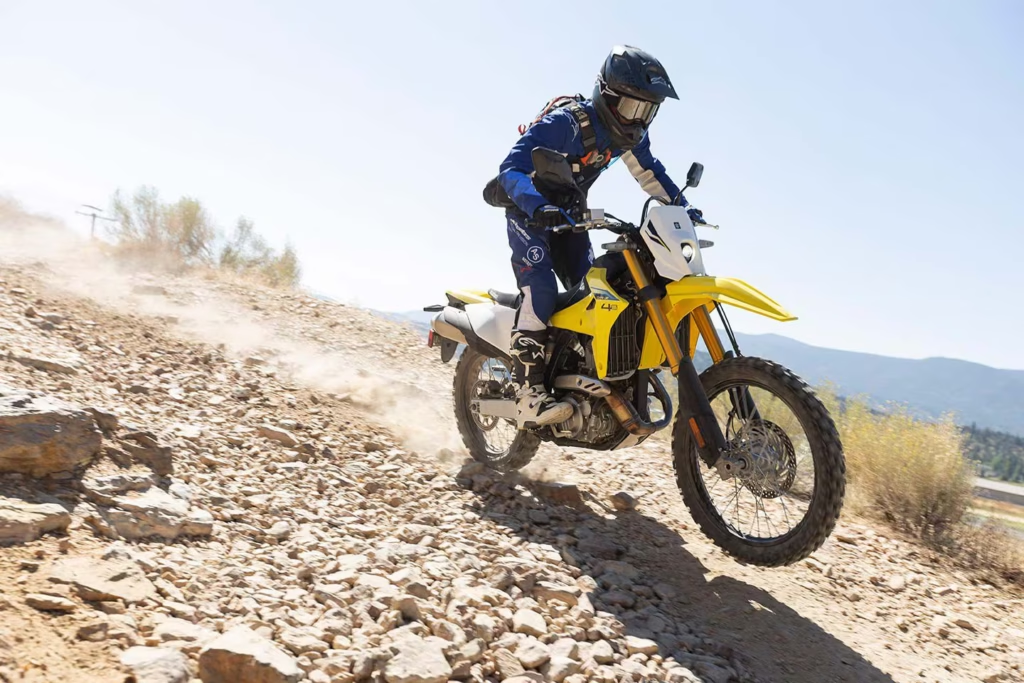
Attack the trail and you find the DR-Z’s limit. At a leisurely and playful pace, the DR-Z is very agreeable. But when pushing a racey pace through loose, chunky, and technical terrain, the DR-Z becomes less surefooted. Wick it up too much, and the suspension deflects the bike off course due to damping settings that can’t keep up.
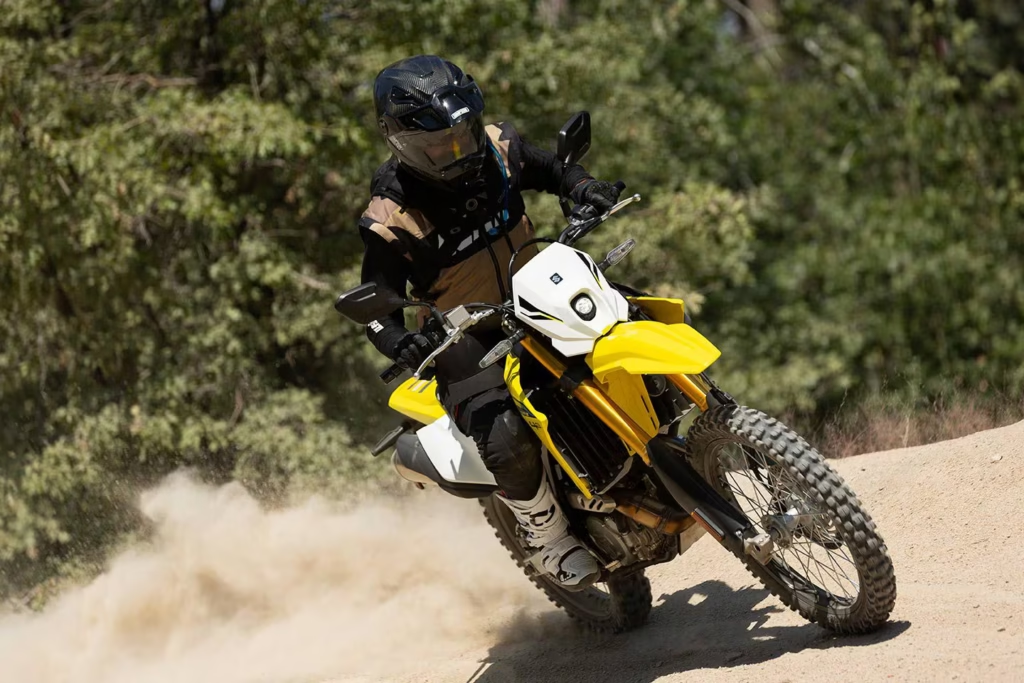
“Suzuki offers the best compromise of the three bikes,” Conner says. “It doesn’t offer the killer nature of the Husky off-road, but has a plushness that is totally enjoyable when plowing through rocks and ruts at slower speeds. Where it loses its edge is when the speed gets dialed up; it’s there the suspension starts to get a bit overwhelmed. But at sane speeds off road it’s really nice.”
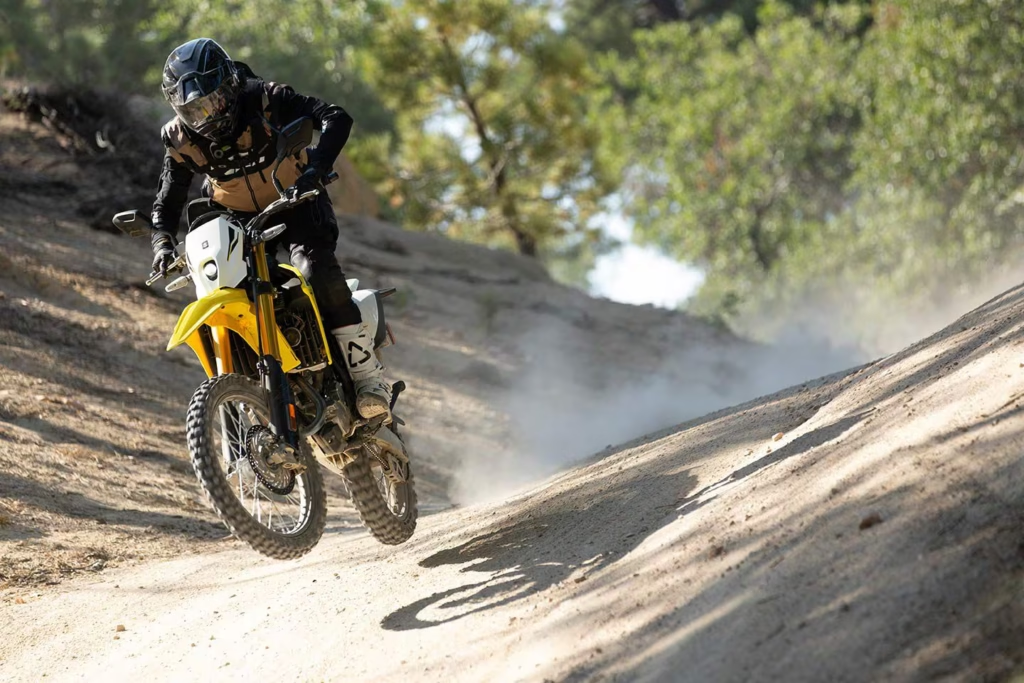
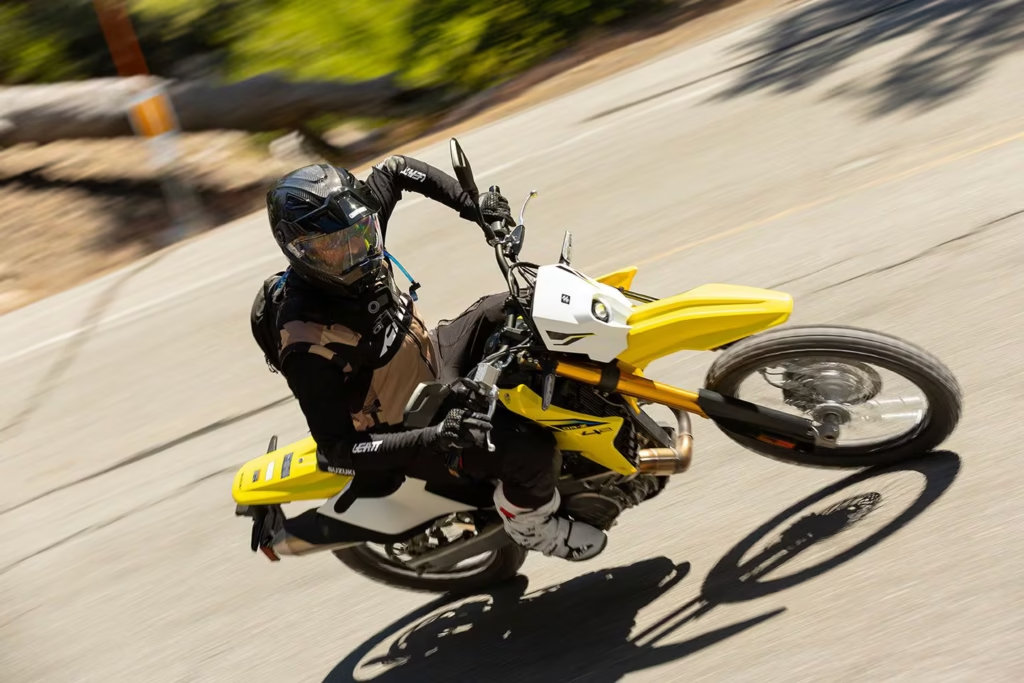
On the pavement, it’s the same story. The DR-Z is comfortable and playful at moderate speeds, but when you start going fast on a twisty road, the engine runs out of legs, the suspension wallows, and the front brake’s soft power makes you reach for the lever sooner than on the other bikes. Adjusting the suspension damping improved the DR-Z’s midcorner control, but the front end doesn’t deliver as much feedback as the KTM or Husqvarna.
Husqvarna
We can talk a lot about the FE 350s chassis when it comes to performance-driven innovation. But the basics are that the chromoly steel frame and hybrid subframe were new in 2024 with the goal of improving strength and optimizing flex characteristics for energy absorption and stability. The hybrid subframe is made of 60% polyamide (yes, plastic) and 40% aluminium and only weighs 3.9 pounds.
A major update to Husqvarna’s dual sport platform is the addition of a fully adjustable WP Xact closed cartridge fork, replacing the previous separate-function, open cartridge WP Xplor fork. The new WP Xact fork is pulled from Husqvarna’s motocross and cross-country competition models. But unlike the FC 350, which uses an air fork, the FE 350s uses a coil spring fork. And as in years past, the Husqvarna FE 350s is equipped with a WP Xact shock and linkage, whereas its orange counterpart, the KTM EXC-F 350, uses WP’s linkless PDS (Progressive Damping System) shock.
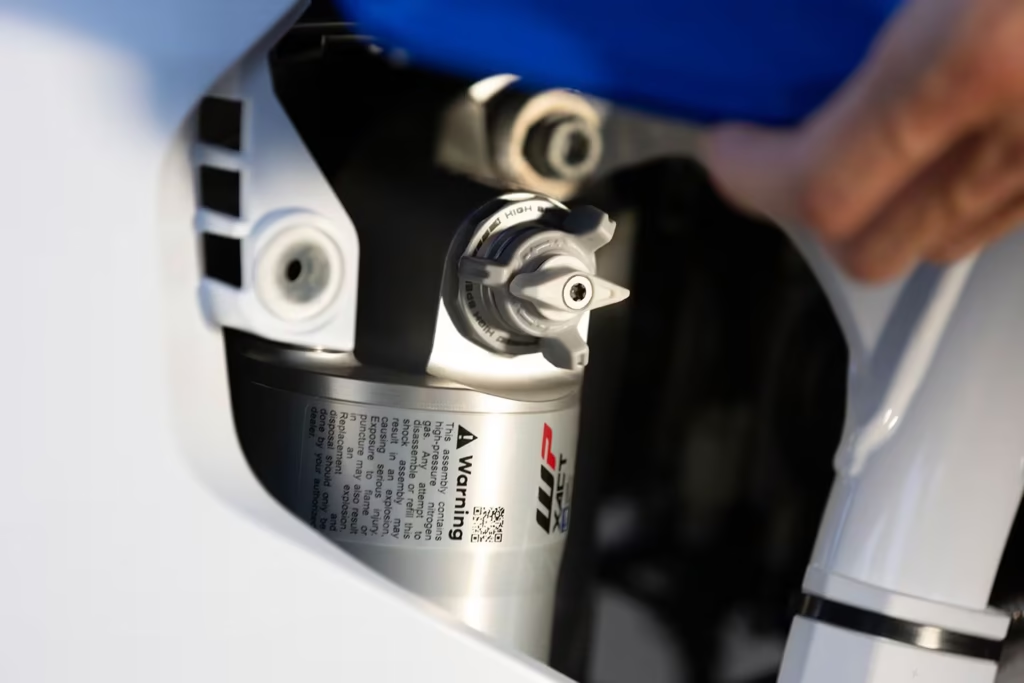
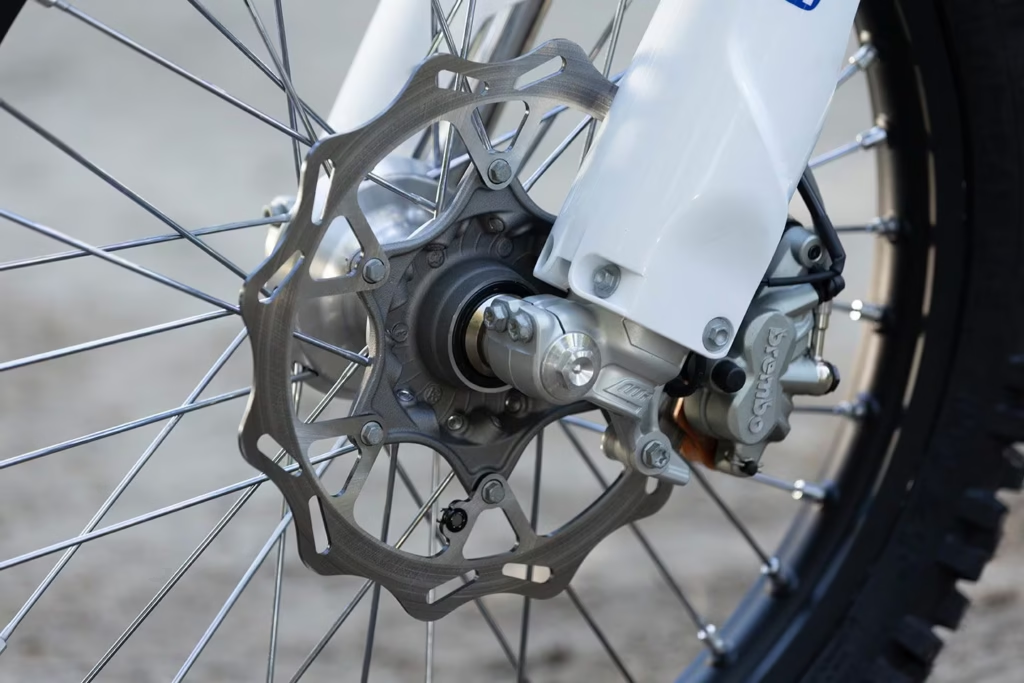
Enduro-ready 21/18-inch wheels come with Continental TKC80 tires standard. The brake system is upgraded to Brembo, as is the hydraulic clutch, replacing the Braketec components used for a few years.
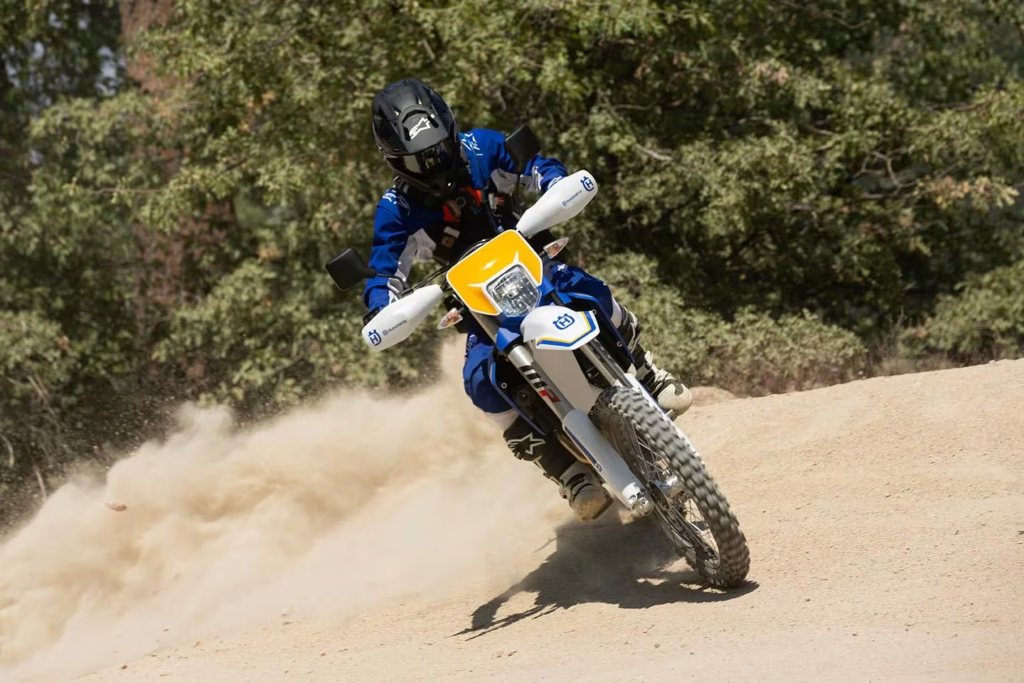
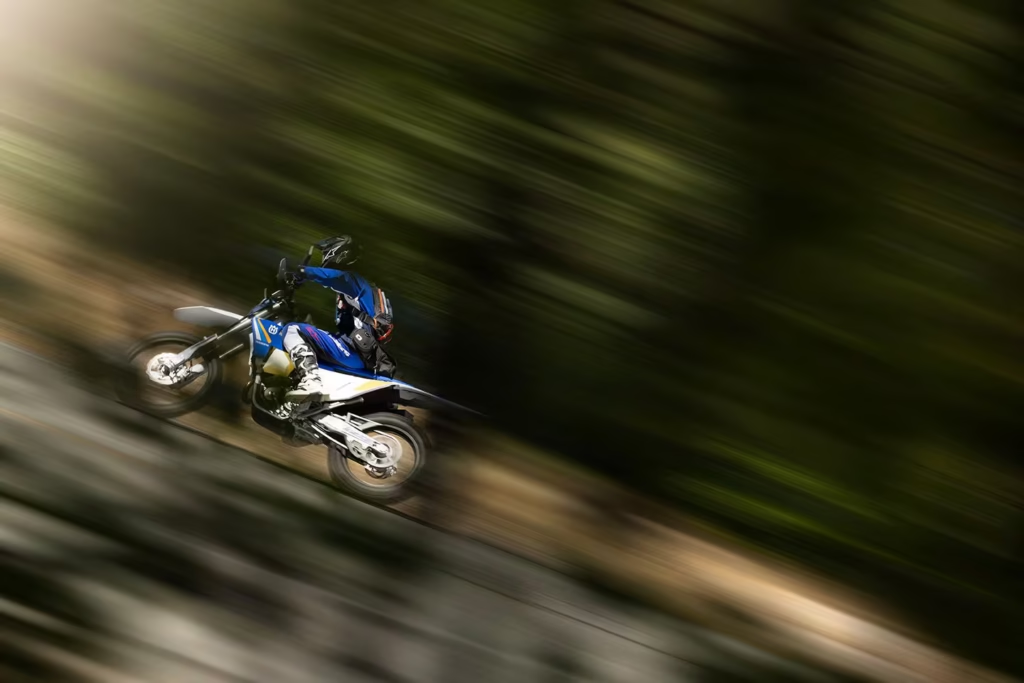
Husqvarna’s FE 350s handles like a competition enduro, which is no surprise, as it’s basically a homologated street-legal version of the 350 competition models. Steering is direct and handling is sharp. Regardless of speed, the FE 350s easily changes direction quickly without feeling twitchy or overly sensitive to rider inputs. The bike is flickable, stable, and easy to manage at a measured 252.4 pounds without fuel.
“The suspension—especially the fork—is outstanding,” Waheed says. “On the road, it’s unbelievably composed, and off-road it offers tremendous hold-up and support. This is the kind of bike you can push hard in the dirt, and it rewards that aggression.”
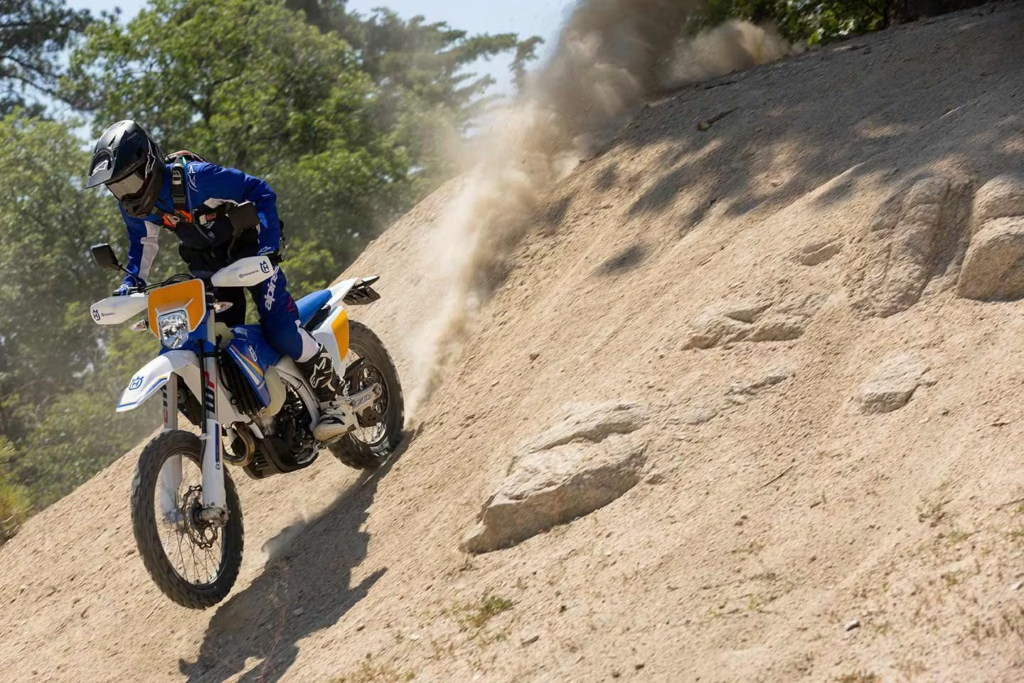
The WP Xact fork is noticeably stiffer than the WP Xplor unit it replaces. The new suspension has a lot of holdup and rides high in the stroke at slow speeds, but is still comfortable. In technical rock sections, the bike doesn’t deflect from side to side, but the suspension is not as comfortable in nasty terrain as the DR-Z’s. Opening up the compression damping adjuster all the way added some comfort, but the FE works best when ridden with some aggression.
“It has really good hold up and could be considered stiff, so it doesn’t offer the plushest ride with picking through tech sections,” Conner says. “But when you pick up the pace it has by far the best control.”
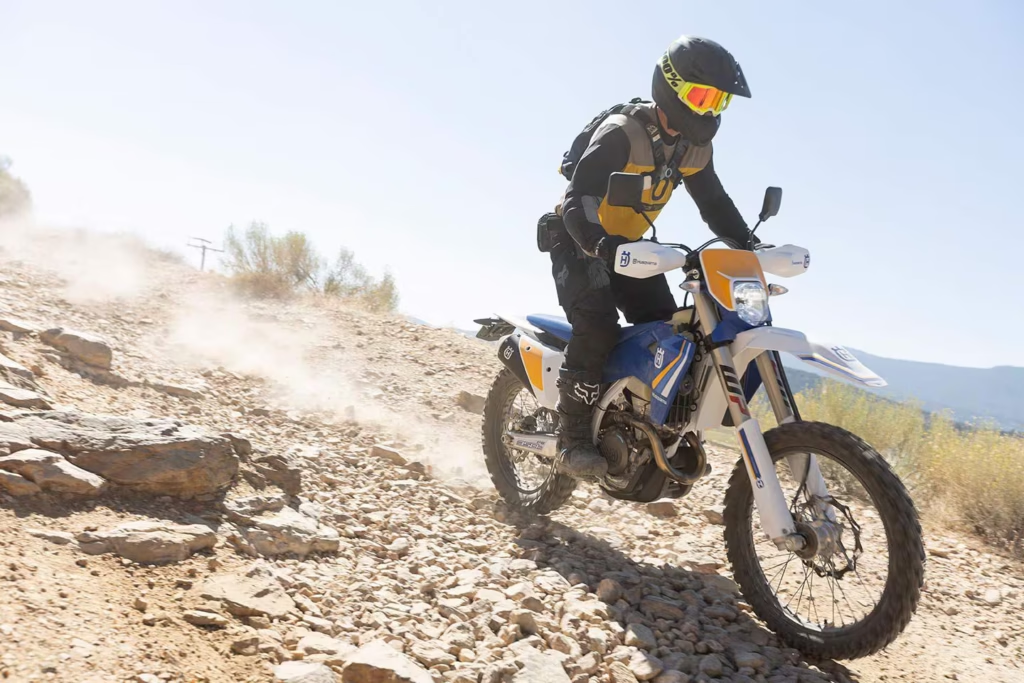
Driving through obstacles, the WP suspension offers more control than the competition. For riders who like to attack the trail, the Husqvarna can handle just about anything you throw at it. The chassis, suspension, and brakes work the best out of the three bikes. Whether you are jumping, sliding, cornering, or navigating piles of rock, the Husqvarna offers the best performance on- and off-road.
“We didn’t predict that the FE would also be a favorite on the street—at least on tight twisty roads—but the bike is so playful and fun, with quick and responsive steering that it’s a total blast,” Conner says.
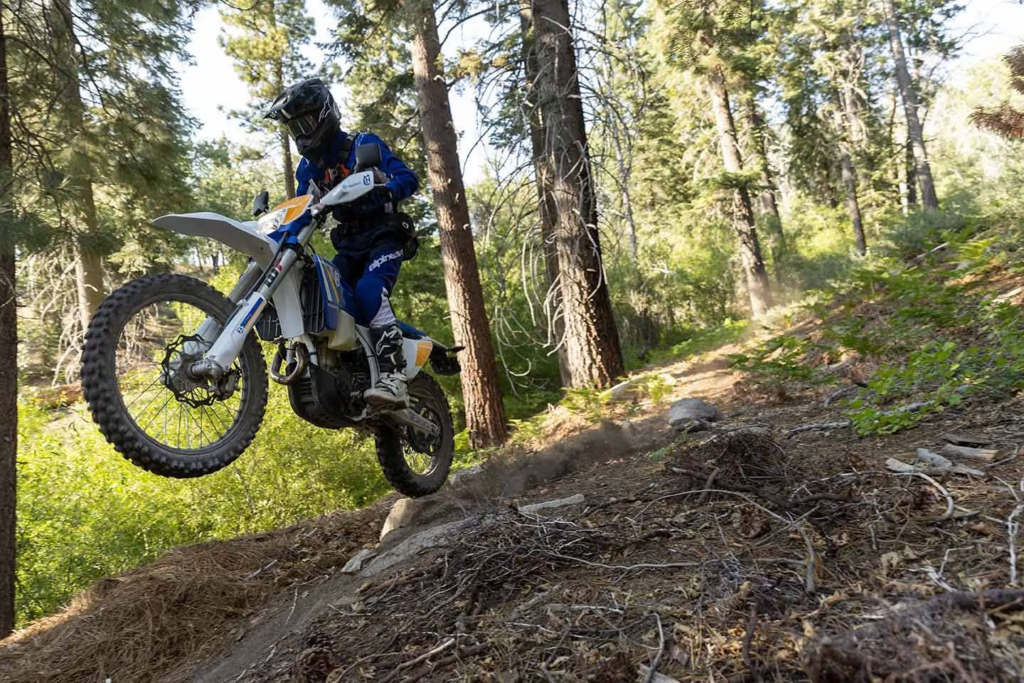
When the dirt ends, the fun doesn’t stop on the FE 350s as long as you aren’t bound for a major highway. On a twisty road, the Husqvarna is as fun as a supermoto. The front brake has a strong bite and progressive power with good modulation. The rear brake is equally strong, but harder to modulate, especially in motocross boots, and with no ABS, it’s up to the rider to avoid unwanted wheel locking.
Ergonomics
The sitting position and cockpit are similar on the three bikes, but the KTM is undoubtedly the most comfortable. Its wide seat and thick midsection provide a solid platform to support rider weight. The wide handlebars and flat seat stretch out the rider triangle; the reach to the footpegs is the tightest.
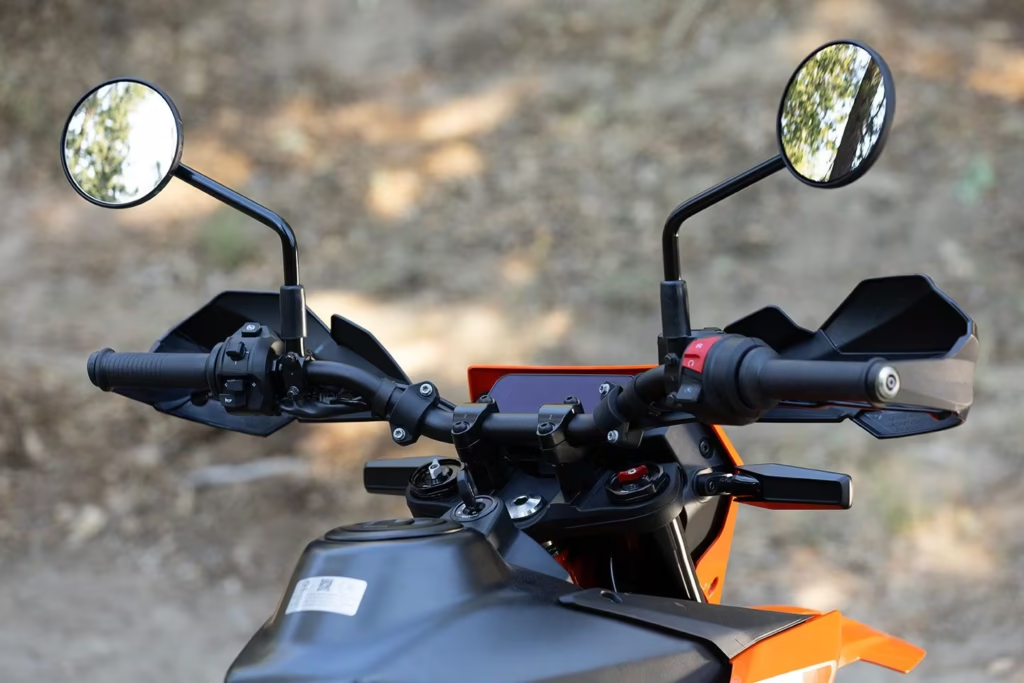
“The KTM’s seat is by far the best of the bunch, offering a wider platform, the lowest height and the best padding,” Conner says “For newer riders, this bike will offer the most inviting place to sit and control the bike.”
The Suzuki ergonomics are neutral but not particularly comfortable. Raising the handlebar over an inch creates a more natural reach to the controls, but the new DR-Z4S has familiar ergonomics. The tall, flat seat allows riders to stretch out and find comfort that way, but there is no getting around the eventual fatigue that can come from the Suzuki’s narrow seat on longer rides.
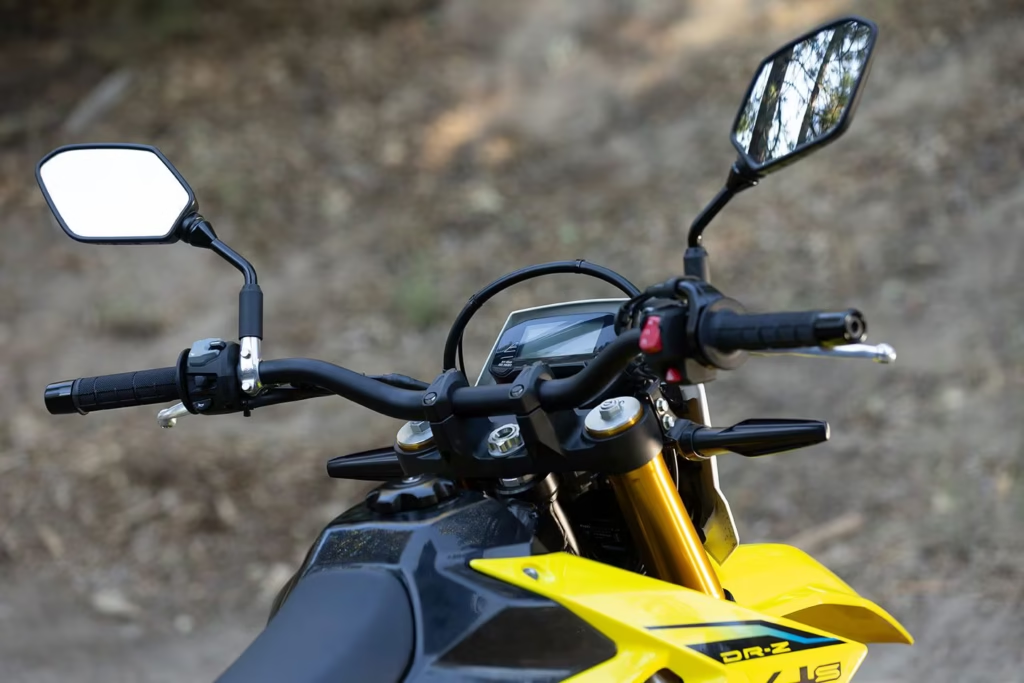
“Control placement is intuitive, the bar bend feels natural for both seated and standing positions, and the bike’s overall dimensions strike a comfortable balance between agility and stability,” Waheed says.
“It has a seat that’s just about as unforgiving as the Husky,” Conner offers. “It’s also on the tall side and not very new-rider friendly.”
The Husqvarna has similar ergonomics to the Suzuki, but the seat is taller and firmer, and it’s the only bike in the test to not offer passenger accommodations. But the FE is equipped with handguards, as is the KTM. The Suzuki DR-Z4S handguards are available as an accessory.
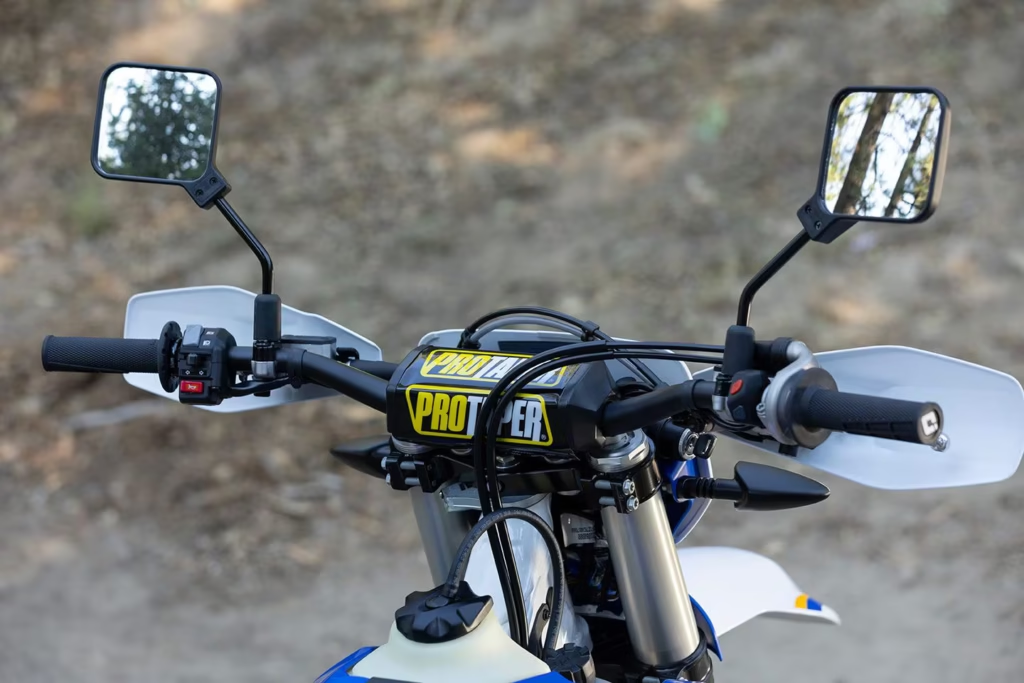
“Ergonomically, the FE 350S is pure dirt bike: a narrow seat, flat bars, and a riding position nearly identical to the DR-Z4S,” Waheed says. “If you’re looking for something that feels like a real dirt bike with a plate, this is it.”
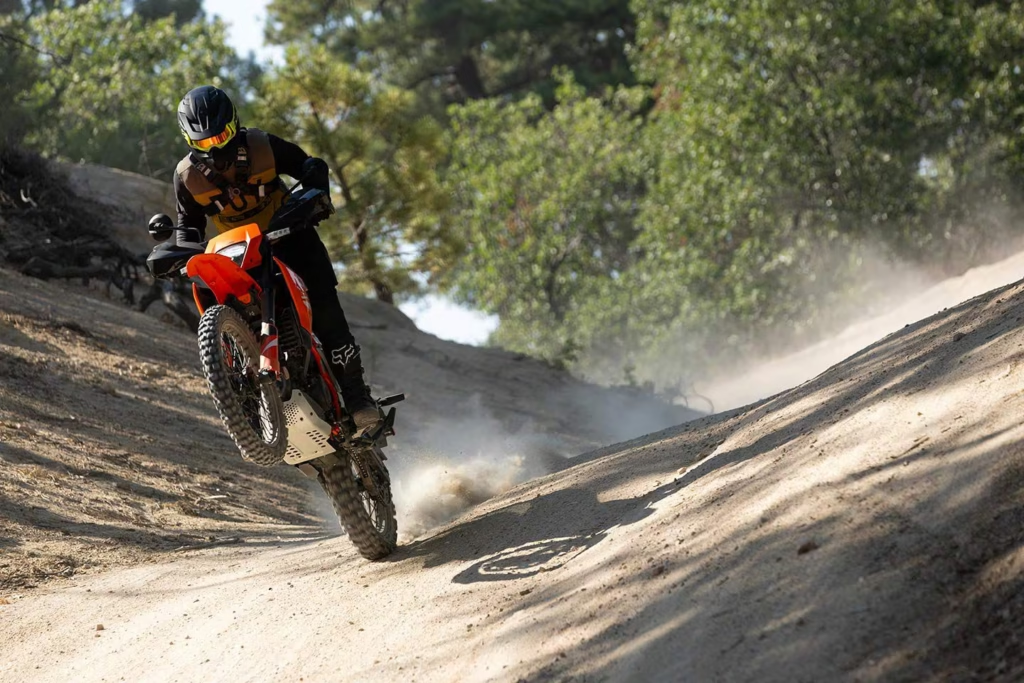
What is the Best Lightweight Dual Sport in 2025?
It’s as much about your mission as it is about performance with these three takes on the lightweight dual sport. Each offers a compelling argument for different types of dual sport riders with unique designs and features aimed at completing the ride as their manufacturers see fit.
KTM’s 390 Enduro R is the most streetable of the three, has the lowest price tag, the highest top speed, and makes the most horsepower. Its engine and chassis make the 390 Enduro R a great dual sport for riders who will spend many miles on pavement. But it lacks the refinement, versatility, and off-road performance of the Suzuki DR-Z4S.
KTM’s new 390 Enduro R rides similarly to a lightweight adventure bike, and we love that about it. Riders will appreciate the KTM’s streetability as a daily rider with standard features such as smartphone connectivity and a USB charging port. At $5499, we highly recommend the KTM 390 Enduro R to those who need an everyday utility vehicle as much as they need a weekend toy.
Suzuki’s new DR-Z4S is a great motorcycle. Balanced, sporty, and refined, it offers an appealing mix of on-road comfort and off-road performance. It splits the difference between the KTM and Husqvarna in many ways. Price, power, comfort, and performance: the Suzuki sits right in the middle. It is more capable than the KTM off-road, but not nearly as performance-oriented as the Husqvarna FE 350s. For riders who want more off-road capabilities than the KTM but don’t want the aggressive nature of the Husqvarna, the Suzuki DR-Z4S is an appealing middle ground.
As good as the new KTM 390 Enduro R and Suzuki DR-ZS are, the best lightweight dual sport is the Husqvarna FE 350s. We recognize $13,049 is a lot of money for a dual sport. But when it comes to performance, capability, and componentry, you get your money’s worth in the Husqvarna FE 350s. It uses an engine and frame derived from a motocross bike and features fully adjustable WP suspension, Brembo brakes, and weighs 252.4 pounds without fuel.
The 2025 Husqvarna FE 350s engine makes less power than the DRZ-4S and 390 Enduro R, but its character, response and control are superior. And while it does require more maintenance than its competition, the engine is quick revving, provides tractable low-end torque, a punchy midrange, and usable top-end power up to 11,000 rpm. On flowing fire roads, twisty single track, and technical rock sections, the Husqvarna FE 350s performs like a competition enduro. The FE is not the best freeway highway companion, but once the pavement becomes twisty, the 350 can carve up a mountain road like a supermoto, popping wheelies, cutting skids, and seeking apexes.
Suzuki’s new DR-Z4S and KTM’s 390 Enduro R offer a lot and serve the needs of street-oriented dual sport riders. But being a jack of all trades does not make you the king. Husqvarna’s FE 350s is the best dual sport because it compromises the least. It may be more expensive and less comfortable, but it’s completely unrestricted in its tenacity. On road or off, the Husqvarna FE 350s delivers exceptional, thrilling performance and capability.
2025 KTM 390 Enduro R Specs
| MSRP: | $5499 |
| Engine: | DOHC, liquid-cooled, 4-stroke single-cylinder, 4 valves |
| Displacement: | 399cc |
| Bore x Stroke: | 89.0 x 64.0mm |
| Compression Ratio: | 12.6:1 |
| Transmission/Final Drive: | 6-speed/chain |
| Cycle World Measured Horsepower: | 35.3 hp @ 9270 rpm |
| Cycle World Measured Torque: | 20.9 lb.-ft. @ 8550rpm |
| Fuel System: | Bosch EFI w/ 46mm throttle body; ride-by-wire |
| Clutch: | Wet, multiplate antihopping slipper; cable actuation |
| Frame: | Steel trellis |
| Front Suspension: | 43mm WP Apex, compression and rebound damping adjustable; 9.1 in. travel |
| Rear Suspension: | WP Apex monoshock, preload and rebound damping adjustable; 9.1 in. travel |
| Front Brake: | 2-piston caliper, 285mm floating disc w/ ABS |
| Rear Brake: | 1-piston caliper, 240mm floating disc w/ ABS |
| Wheels, Front/Rear: | Wire spoke; 21 x 1.85 in. / 18 x 2.5 in. |
| Tires, Front/Rear: | 90/90-21 / 140/80-18 |
| Rake/Trail: | 27.1°/4.2 in. |
| Wheelbase: | 58.1 in. |
| Ground Clearance: | 10.7 in. |
| Seat Height: | 35.0 in. |
| Fuel Capacity: | 2.4 gal. |
| Cycle World Measured Dry Weight: | 351.6 lb. |
| Contact: | ktm.com |
2025 Suzuki DR-Z4S Specs
| MSRP: | $8999 |
| Engine: | DOHC, liquid-cooled, 4-stroke single-cylinder, 4 valves |
| Displacement: | 398cc |
| Bore x Stroke: | 90.0 x 62.6mm |
| Compression Ratio: | 11.1:1 |
| Transmission/Final Drive: | 5-speed/chain |
| Cycle World Measured Horsepower: | 33.5 hp @ 8120 rpm |
| Cycle World Measured Torque: | 23.9 lb.-ft. @ 6610 rpm |
| Fuel System: | Fuel injection w/ 42mm throttle body, ride-by-wire |
| Clutch: | Wet, multiplate SCAS slipper clutch; cable actuation |
| Frame: | Steel twin-spar |
| Front Suspension: | KYB 46mm inverted telescopic fork, compression and rebound damping adjustable; 11.0 in. travel |
| Rear Suspension: | KYB link-type shock, spring preload, compression, and rebound damping adjustable; 11.7 in. travel |
| Front Brake: | 2-piston caliper, 270mm disc w/ Bosch ABS |
| Rear Brake: | 1-piston caliper, 240mm disc w/ Bosch ABS |
| Wheels, Front/Rear: | Wire spoke; 21 x 1.6 in. /18 x 2.2 in. |
| Tires, Front/Rear: | 80/100-21 / 120/80-18 |
| Rake/Trail: | 27.5°/4.3 in. |
| Wheelbase: | 58.9 in. |
| Ground Clearance: | 11.8 in. |
| Seat Height: | 36.2 in. |
| Fuel Capacity: | 2.3 gal. |
| Cycle World Measured Dry Weight: | 318.2 lb. |
| Contact: | suzukicycles.com |
Husqvarna FE 350s Specs
| MSRP: | $13,049 |
| Engine: | DOHC, liquid-cooled, 4-stroke single-cylinder, 4 valves |
| Displacement: | 350cc |
| Bore x Stroke: | 88.0 x 57.5mm |
| Compression Ratio: | 13.7:1 |
| Transmission/Final Drive: | 6-speed/chain |
| Cycle World Measured Horsepower: | 30 hp @ 7860 rpm |
| Cycle World Measured Torque: | 20.3 lb.-ft. @ 7340 rpm |
| Fuel System: | EFI w/ 42mm throttle body |
| Clutch: | Wet, multiplate Damped Diaphragm Steel (DDS); hydraulic actuation |
| Frame: | Central double-cradle chromoly steel |
| Front Suspension: | WP Xact 48mm closed-cartridge coil-spring fork, compression and rebound damping adjustable; 11.8 in. travel |
| Rear Suspension: | WP Xact shock, spring preload, high/low-speed compression and rebound damping adjustable; 11.8 in. travel |
| Front Brake: | Brembo 2-piston caliper, 260mm disc |
| Rear Brake: | Brembo 1-piston caliper, 220mm disc |
| Tires, Front/Rear: | 90/90-21 / 140/90-18 |
| Rake/Trail: | 26.1°/NA |
| Wheelbase: | 58.6 in. |
| Ground Clearance: | 13.5 in. |
| Seat Height: | 37.48 in. |
| Fuel Capacity: | 2.1 gal. |
| Cycle World Measured Dry Weight: | 252.4 lb. |
| Contact: | husqvarna-motorcycles.com |
Blake’s Gearbox
Helmet: Fox V3
Goggles: 100 Percent Armega
Jersey: Fox Ranger Off Road
Pants: Fox Ranger Off Road
Gloves: Fox Legion
Boots: Fox Motion
Adam’s Gearbox
Helmet: Simpson Journey Bandit
Jacket: Leatt Moto 4.5 X-Flow
Jersey: Leatt Moto 4.5 Enduro
Pants: Leatt Moto 4.5 HydraDri
Gloves: Leatt Moto 4.5 Lite
Boots: Leatt 4.5 Enduro
Evan’s Gearbox
Helmet: Alpinestars Supertech M10
Goggles: Alpinestars Vision 5 Corp
Jacket: Alpinestars Lite-Dura Softshell
Jersey: Alpinestars Pro-Dura
Pants: Alpinestars Pro-Dura
Gloves: Alpinestars Full Bore
Boots: Alpinestars Tech 7