

info@motofeed.com

2027 KTM 1390 Super Adventure S Evo First Ride
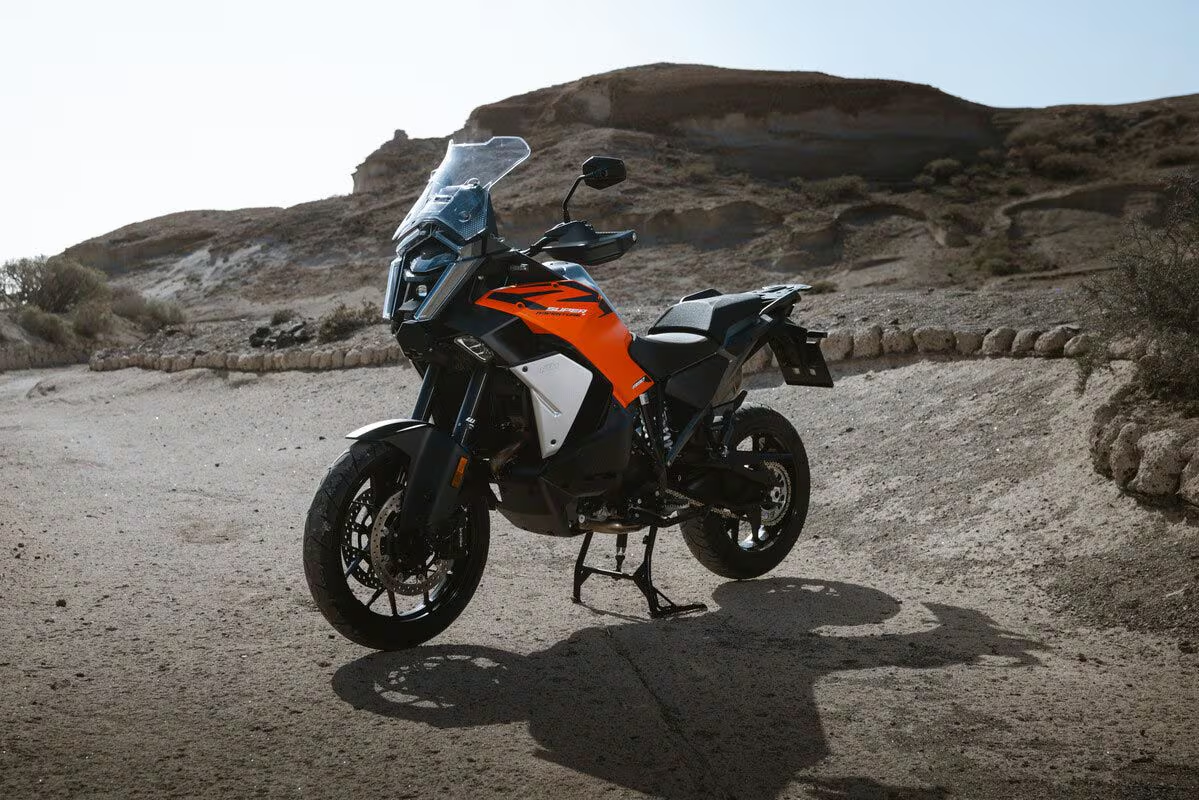
Austria’s street-wise ADV gets an auto-gear box for more versatility.
By Adam Child | cycleworld.com
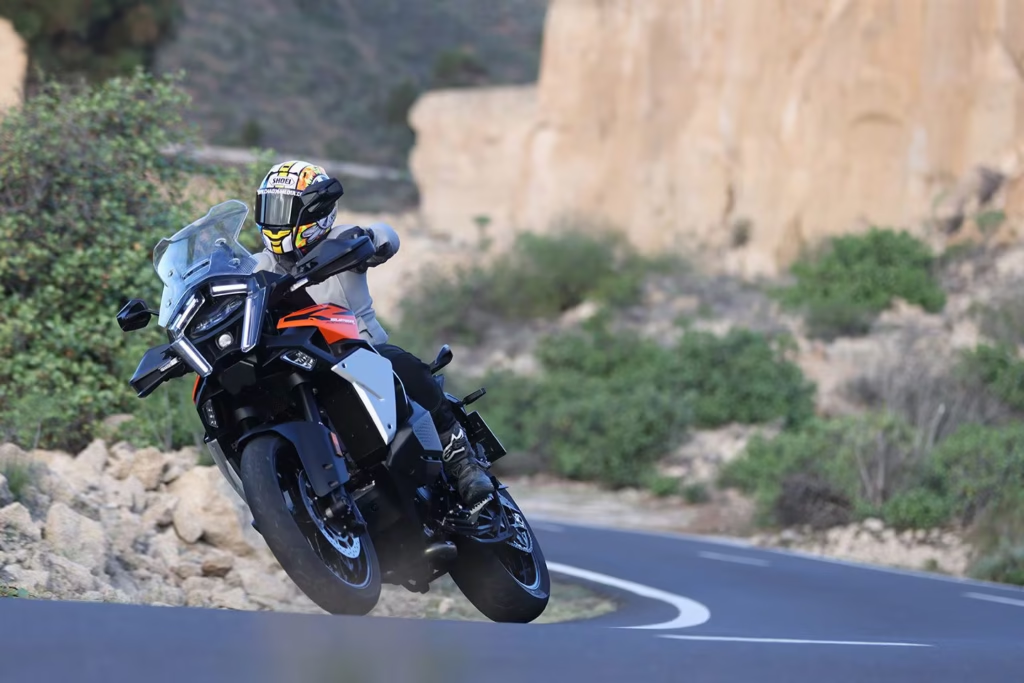
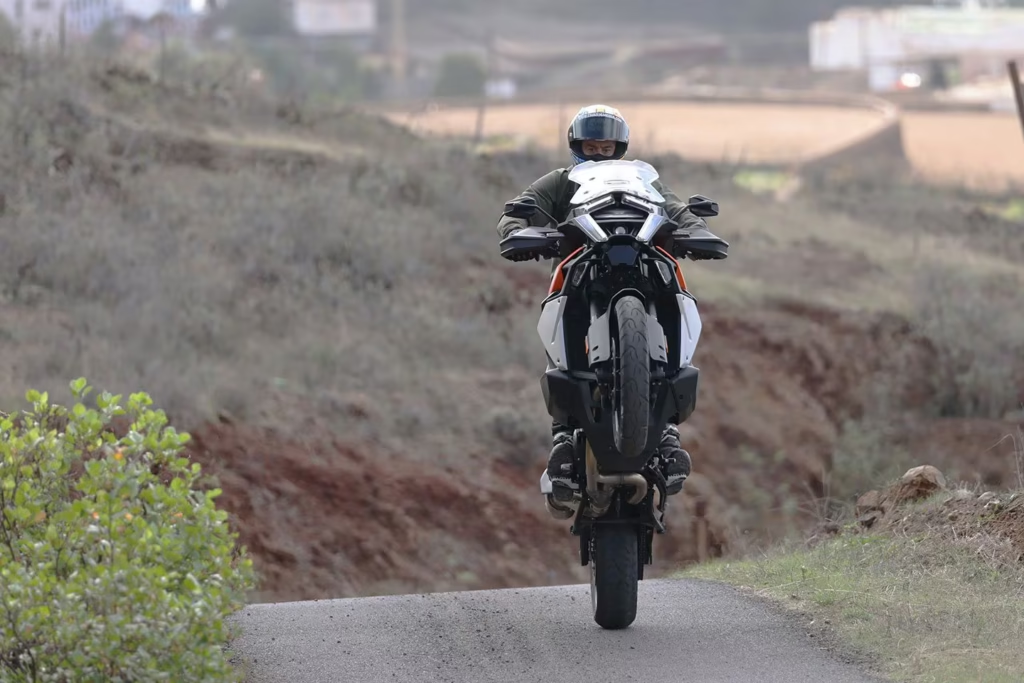
Much has changed at KTM over the last 18 months, with its financial woes now seemingly in the rearview. It’s reassuring to see that the Austrian factory’s publicity shots for this, the new planet-shrinking 1390 Super Adventure S Evo, feature not a rider dressed for a long-haul ride into the back of nowhere but one wearing full race leathers while pulling a crossed-up wheelie on a racetrack—so not everything has changed. The S Evo may be the first ADV to emerge from Mattighofen since the factory resumed production in July, but that Ready to Race spirit lives on.
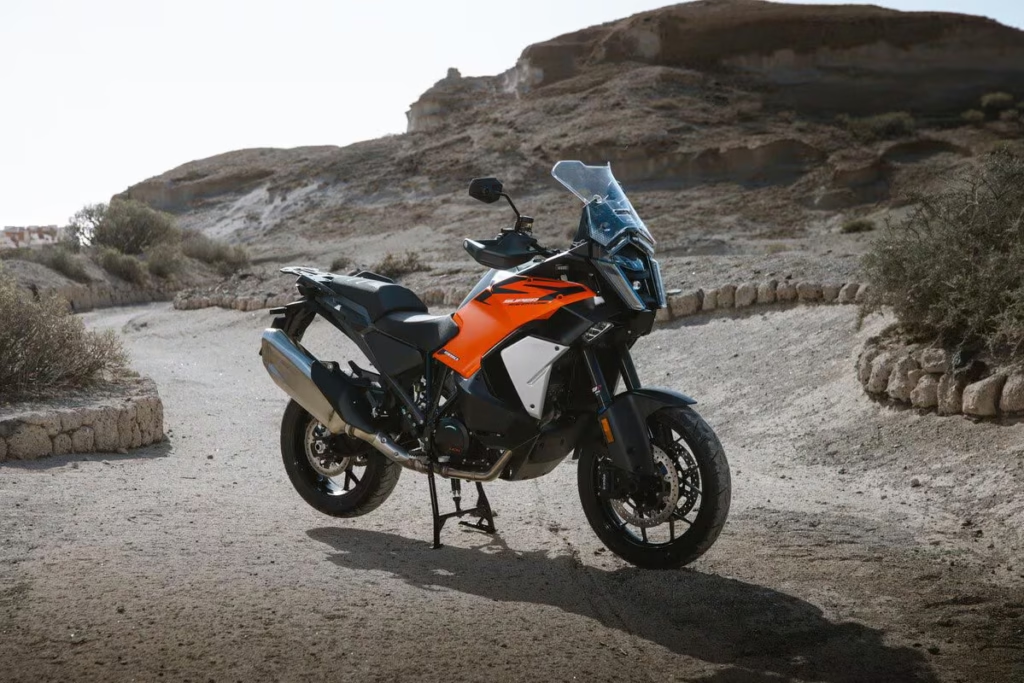
This is borne out by the numbers; the brute makes a claimed 173 hp. More, by a whisker, than any other big-cube ADV on the market. Its Camshift LC8 V-twin jumps up in capacity from the 1290’s 1301cc to 1350cc. While it revs hard and free like a pure sportbike, it also churns out a gut-wrenching 107 lb.-ft. of torque at just 8000 rpm. It hits the scales at a claimed 503 pounds, so it is ultra-competitive on weight too. Climb aboard, find some space, and straighten your arms on a whiff of throttle. It is as quick as it is commanding.
But the V-twin‘s flexibility and outright pace are not the big story here. And that, as you may well have surmised, is because the S Evo is absolutely bristling with new tech.
Tech-laden ADV
Love it or hate it, this is the frontline now. Manufacturers are battling to make not only the best motorcycles but also the smartest. For the Super Adventure S Evo, KTM has upped the game with an even more active and adjustable iteration of its WP SAT (Semi-Active Technology) suspension, which adjusts its damping rates in real time according to riding inputs and the terrain, and also features four selectable damping modes: Comfort, Street, Sport, and Rain.
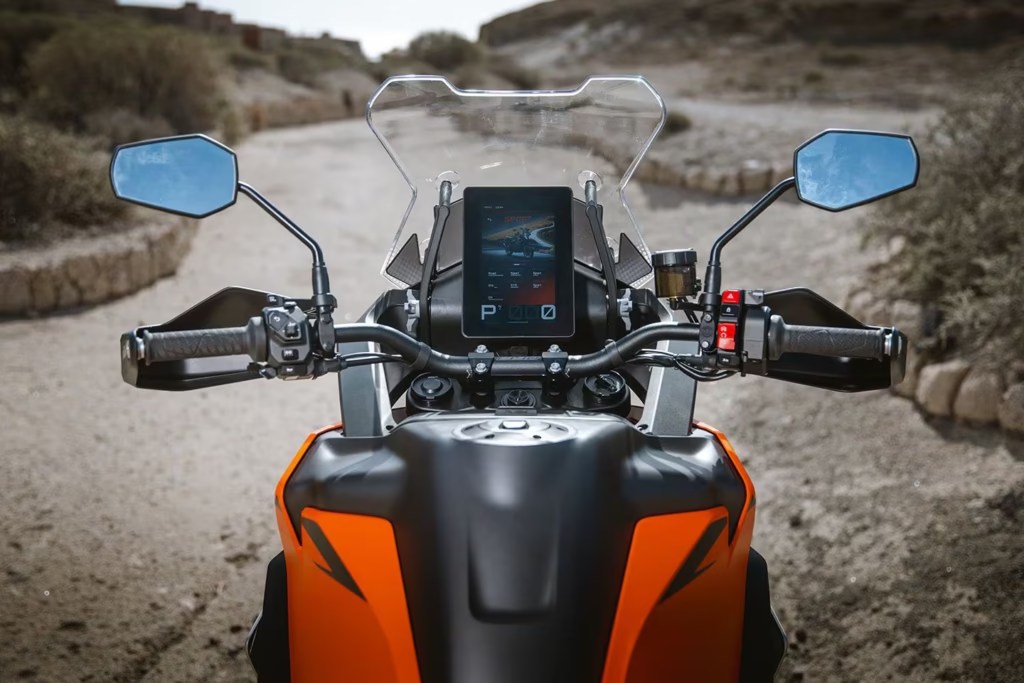
A full-color 8-inch portrait touchscreen, complete with an anti-smudge and anti-reflection coating, is one of the largest on the market and, in terms of size and functionality, is the closest we’ve yet come to having a laptop bolted into the cockpit. At the heart of everything, it features integrated sat-nav and allows the rider to change the spring preload and incremental damping rates to fine tune the ride. Fifth-generation Bosch front radar, coupled with Adaptive Cruise Control, now has a Group Ride mode to make it safer when riding with mates in close formation.
New Automatic Transmission
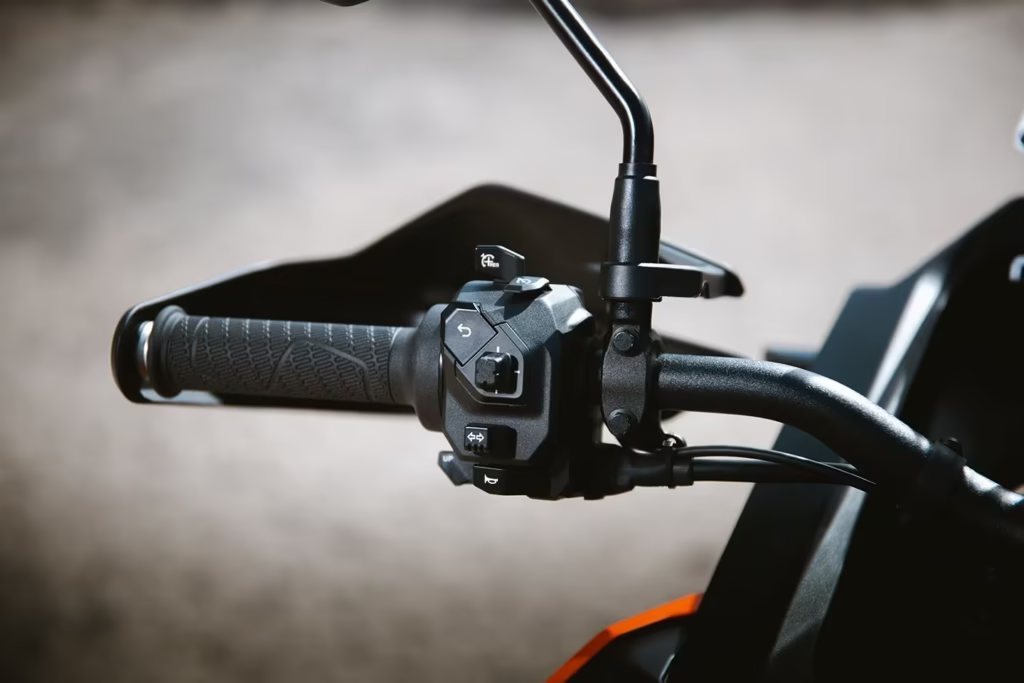
Automated Manual Transmission (AMT) comes as standard on the Evo, which is the only S model available in the US. It features a centrifugal clutch system to facilitate clutchless riding, similar to that of a twist-and-go scooter, and dispenses with a conventional clutch lever at the bar. The rider can choose between a fully automated setup with three shift modes (Comfort, Street, and Sport) or manually change gear via a paddle shift on the left bar or conventionally using the foot gear selector, which looks normal enough but is actually an electrical switch and not connected to anything mechanical like a shift shaft. Rapid downshifts can also be made by quickly closing the throttle.
KTM has also installed a Park mode that mechanically locks the gearbox, similar to an automatic car, to stop the bike from rolling, while gear patterns now run a P-N-1-2-3-4-5-6 order with the traditional neutral between first and second gears removed.
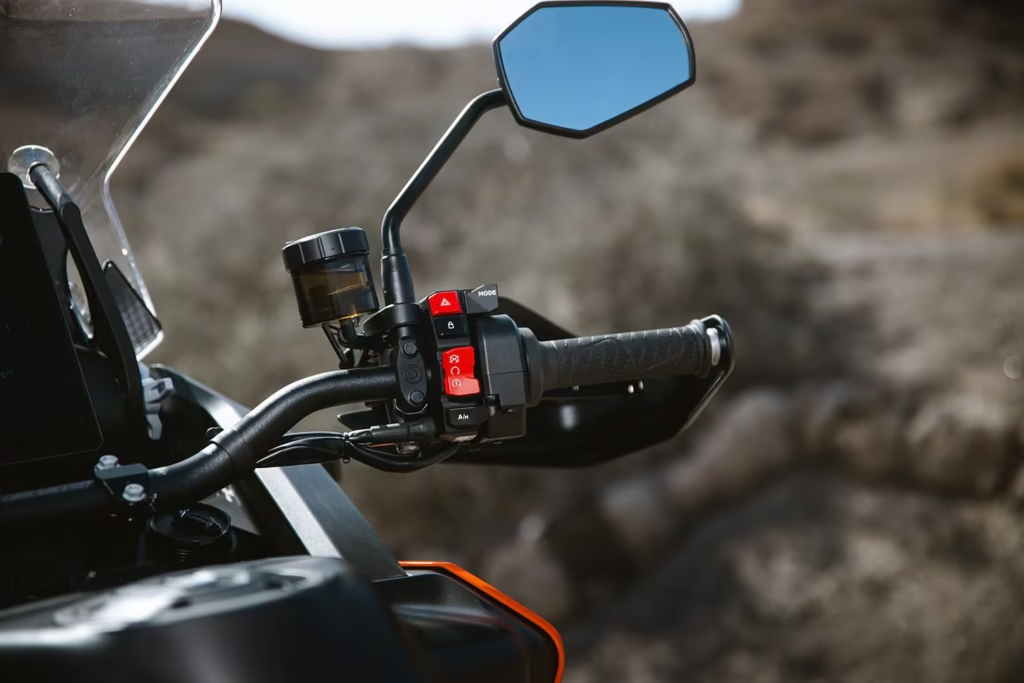
As this is the top spec Evo model, multiple rider aids, including Motorcycle Traction Control (MTC), adjustable cornering ABS, a tire pressure monitoring system, and a smart keyless system come as standard. There’s also a good old fashioned centerstand.
In a bid to reassure those of us who may not be completely comfortable with all this techno wizardry (after all, what happens if one or more of these systems goes on the blink?) there is a new factory warranty of four years to fall back on. Pricing starts at $22,699 for the Evo, which puts it more on par with Triumph’s Tiger 1200 than its more expensive and most direct rivals, the BMW’s R1300 GS ASA and Ducati’s Multistrada V4 S. Cycle World’s test machine also had the Tech Pack which, should you decide to keep after the demo period of around 930 miles, raises the price to $23,598.
Up close, this big orange beastie looks as imposing as it does focused. Clearly, it’s an adventure bike built primarily for the road. I’m nearly 5-foot-7 but once aboard could get both feet securely to the ground at the same time with the seat in its 33.3-inch low position; tall position is 34.1 inches. There is no self-lowering system to automatically drop the seat as on the 1390 like there is on the competition from Ducati, BMW, and Harley, but immediately the Evo felt more manageable than Super Adventures of yore.
Electronic Adjustments
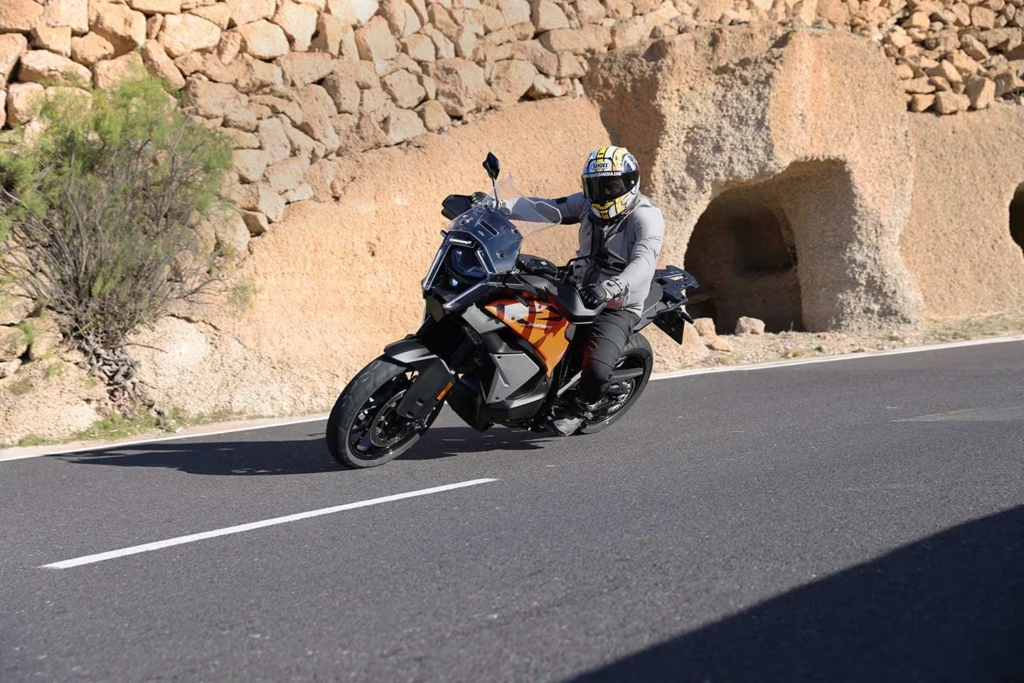
The new screen is manually adjustable through 70mm (2.8 inches), the ignition is keyless, and there’s a sense of high-end finish and slick functionality. That enormous portrait dash—more tablet than tach—dominates the view. Backlit switchgear adds a touch of class and is easy to use. The rider feels encouraged to explore the dash and all its options.
I dove into the custom mode, removing the traction control to get a feel for the S Evo’s front end liveliness (as advertised by KTM promo shots) and explored the multiple riding modes, which not only change the engine mapping but also the rider aids and semi-active suspension.
There’s a bewildering amount of choice, but everything is color-coded with clear graphics, and you can reduce or magnify any part of the screen as if zooming in on a photo on your phone. You can also choose how much or how little information you want to be displayed on the dash and, should you get lost, there is an idiot’s home button to bring you back to the start.
Modes can be changed via the glove-friendly touchscreen or a mode button on the right bar. Other information can be navigated via the touch screen or, if you prefer not to take a hand off while riding, the backlit joystick on the left bar. Furthermore, everything can be turned off. If, for example, you don’t want the radar-adaptive cruise control, you can quickly deactivate it and run standard cruise control instead, and it’s the same for the traction control and hazard warning. Once off, a rider aid doesn’t automatically switch back on again and revert to a standard KTM setting when the ignition is switched off and on. Instead, your settings are saved.
Riding With KTM’s Automated Manual Transmission
KTM’s Automated Manual Transmission (AMT) makes its debut on S Evo and, essentially, gives the rider two options: auto (A-Mode) or manual (M-Mode), the latter featuring a traditional shift pattern, albeit without a clutch lever. Flick into A-Mode via a button on the right bar and “Auto” is displayed on the dash—and that’s it. Twist the throttle and go, much like a 173 hp scooter. Revs get to around 1800 rpm before the Super Adventure’s wheels start to turn. It’s a bit disconcerting at first as there’s no physical clutch lever or biting point, but the release and initial movement are smooth.
Of course, the left hand instinctively grabs for a lever that doesn’t exist, especially coming to a stop. As a short rider, I rely on the clutch for balancing tall ADVs at walking pace or three-point turns on a hill, so I was initially a tad nervous. But most riders won’t have a problem here as the system quickly becomes second nature. You do, however, need to remember that unless you are in neutral or park, blipping the throttle at a stop light can lead to severe embarrassment.
There are three different shift modes—Comfort, Street and Sport—and these are linked to the riding modes, Rain, Street, Sport, Off-Road, Custom, and an optional Rally mode. AMT automatically selects the appropriate gear depending on which mode you have chosen. Once moving you just sit back and let the gearbox do the work. As an example, in Sport the system automatically holds onto the gear longer and downshifts earlier than in Street or Comfort. You can override the system by manually changing up or down a gear, and you can change each mode too by selecting, say, a Street change in Sport mode.
When riding normally, I found myself using A-Mode and let the bike do the work. Shifts are reasonably smooth and, given that the system is linked to the IMU (and therefore myriad sensors and rider aids), it won’t make a shift when carrying big lean angles. In a typical touring or commuting riding environment, it’s easy and polished.
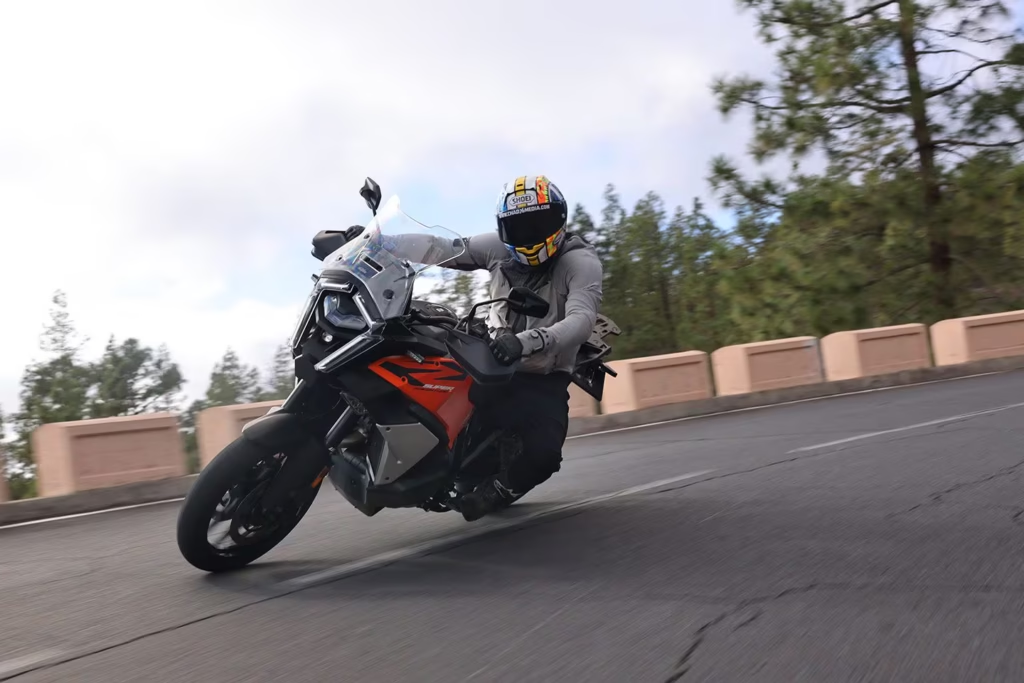
However, when upping the pace you want more control, opting to short-shift or to cog back a gear for more engine braking. And once up to a full-on pace in the hills of Tenerife, changing gears manually is preferred for full control, using the conventionally positioned foot change.
Which of the two modes you choose will be down to circumstance and personal choice. In auto Sports mode, AMT holds onto a gear for too long and revs too high, which inevitably makes the ride feel jagged and overly aggressive, especially in lower gears. After all, there’s so much torque available from the V-twin that you can short shift and still have breathtaking acceleration. Equally, when slowing, I want to use as much engine braking as possible and not rely solely on the Brembo stoppers, but even in Sports mode the Auto system holds on to a gear and does not backshift soon enough. As a result, the S Evo will roll into tight downhill hairpins in third or fourth gear when second would be more effective.
Unless you are in a serious hurry, though, AMT is easy and will make sense on long, tiring days. I can also reveal that manually knocking back one gear—done by backing the throttle past its closed position—is a great way to brighten a dull stretch of road.
Semi-Active Suspension
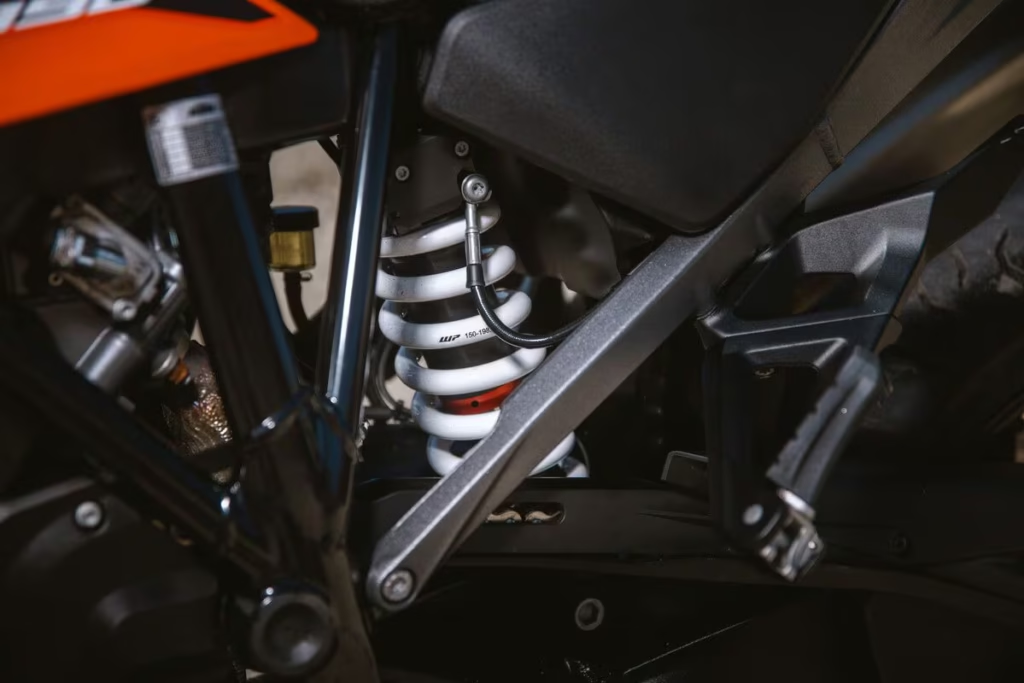
Like the AMT, the WP Semi-active Technology suspension is linked to your chosen riding mode, which automatically selects either Sport, Street, Comfort, or Rain. If you opt for the Suspension Pro package (included in the Teck Pack), you can dive deeper into your settings by incrementally finessing compression and rebound rates via the dash, while the dedicated Off-Road mode stiffens rates for dirt-based fun, and Auto adapts to your style of riding at any given moment. All can be selected on the move.
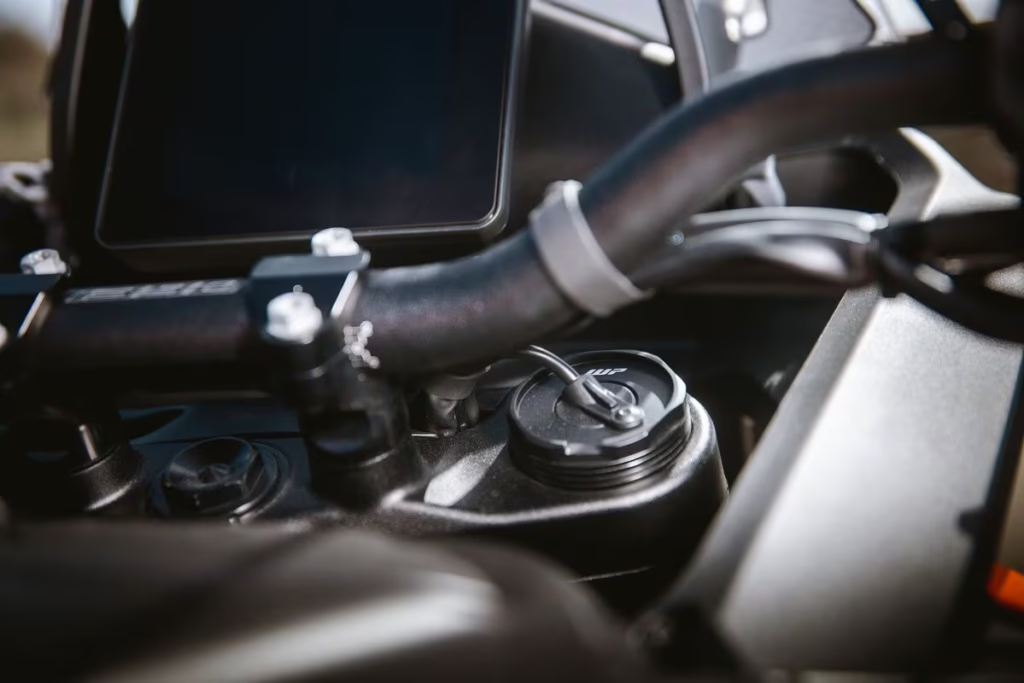
It’s an effective and refined set up. There’s a noticeable difference between the modes but even Comfort mode, which, as its name suggests, is compliant and relaxed for touring, adding stiffness and control when you need it. Grab a handful of throttle and the SAT system steps in to help. Compromise in suspension settings seems hardly to exist anymore.
Sport mode adds even more support, while the anti-dive function slows the long-travel fork’s 220mm stroke under hard braking. Yes, the Super Adventure S Evo has a 19-inch diameter front wheel and dirt-friendly chassis geometry but it’s an absolute blast on the street. Cornering clearance, even in Comfort mode (which has more sag) is seemingly limitless and new Dunlop Trailmax Meridian tires respond well to hard riding on asphalt.
Braking Performance
Braking-wise, KTM has updated the Super Adventure’s pads and added a new master cylinder. Customizable ABS is excellent but not as sharp as the competition from Italy and Germany, although I wonder if I might have been relying on the stoppers more than usual due to the lack of engine braking in auto mode. Unlike the competition, the front and rear brakes are not linked and while you can remove the rear ABS, backing-in supermoto style is very difficult, almost impossible, without a clutch.
Away from all this sporty riding (KTM press rides are invariably more like a time trial than a road test) the 2027 Super Adventure is a bike that will cover ground with brisk efficiency. Raise the screen, set the cruise control to manual or adaptive, and follow the very good integrated sat-nav. With the adaptive cruise control set, you have Braking Assistance, Collision Warning, and Distance Warning. This means it will automatically apply the brakes, controlling the distance between you and the vehicle in front of you. There is also a Group Ride mode that recognizes that you’re riding in a pack of bikes.
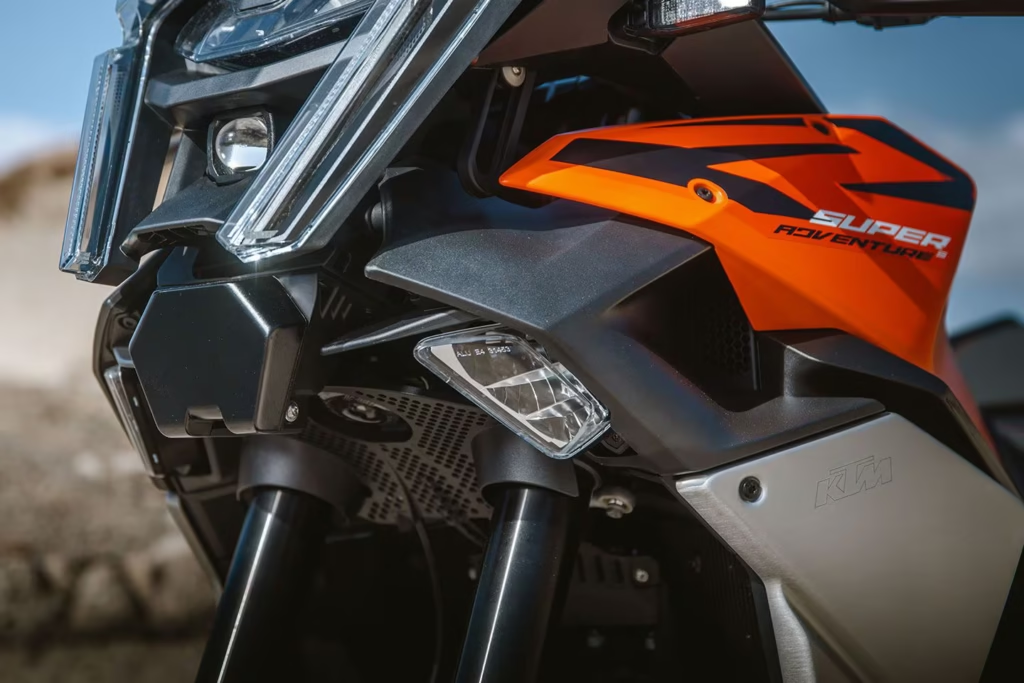
Wind noise is low and weather protection is superb for my height, and taller riders also reported no issues with a 2.8-inch adjustment of the screen. With 30mm (1.2 in.) wider bars and 8mm (0.3 in.) lower pegs placed further outward by 10mm (0.4 in.) there’s more room, too. That gas tank is the largest in this category and KTM quotes an average return of just over 35 mpg. Our test unit managed 32 mpg being ridden reasonably hard at times, which should, in theory, equate to a dry tank in 195 to 214 miles. There are multiple USB-C charging points, a little phone holder on top of the fuel tank, and an old-school but very welcome quality toolkit under the seat.
Duality of KTM’s 1390 Super Adventure S Evo
KTM’s 1390 Super Adventure S Evo certainly feels like the most powerful bike in this class and, more significantly, has a vast amount of useful torque. Always engaging and fun, it is comfortable, protective, and well equipped. Heated grips should probably be standard but, thankfully, a centerstand is. Major service intervals are wide (9300 miles), the fuel tank is the largest in class (6.1 gallons), and there is a standard 4-year warranty. With a $23,598 price as tested, it is competitively priced against the opposition too.
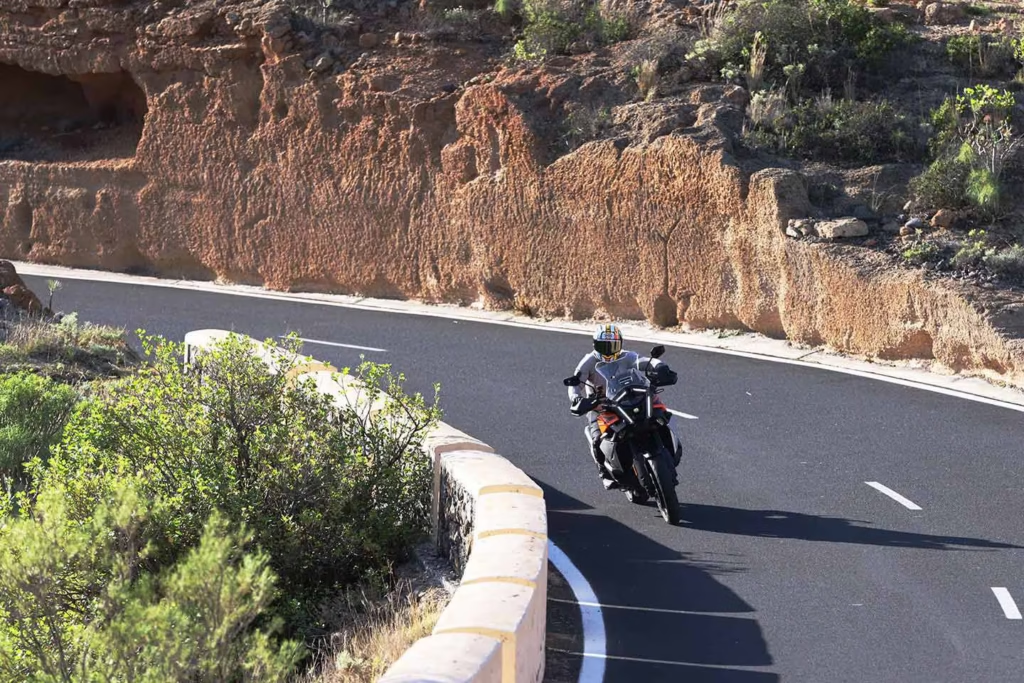
There was no off-road element to this test, which is unusual for a KTM adventure bike presentation, especially when the bike has off-road and Rally modes, not to mention a function called “Jump Detection.” Instead, this was a road test conducted in the true spirit of KTM’s Ready to Race mantra, and the 1390 Super Adventure S Evo lapped up the challenge, my only major frustration being the AMT automatic gearbox’s reluctance to backshift when braking hard.
Few owners will ride their 1390 Super Adventures in the style depicted in its dramatic marketing material: knee down, elbows out, and tires working hard. Such is the Evo’s versatility and electronically enhanced adaptability; most will sit back in comfort, put the AMT into its auto setting and churn out some big and enjoyable miles—all while knowing there’s plenty of performance on tap if needed.
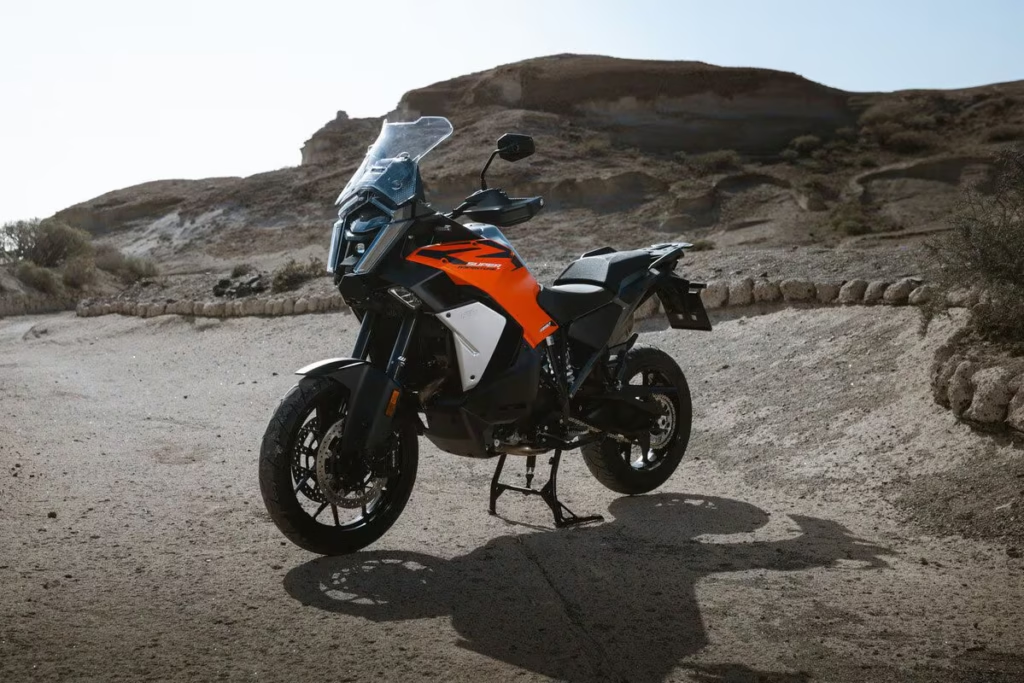
2027 KTM 1390 Super Adventure S EVO Specs
| Engine: | DOHC, liquid-cooled, four-stroke 75-degree V-twin; 8 valves/cyl. with Camshift |
| Displacement: | 1350cc |
| Bore x Stroke: | 110.0 x 71.0mm |
| Compression Ratio: | 13.0:1 |
| Transmission/Final Drive: | 6-speed/chain |
| Claimed Horsepower: | 173 hp @ TBA rpm |
| Claimed Measured Torque: | 107 lb.-ft. @ 8000 rpm |
| Fuel System: | Fuel injected Keihin EFI; 54mm throttle body |
| Clutch: | Automatic PASC slipper clutch, centrifugally operated |
| Frame: | Steel-trellis frame |
| Front Suspension: | 48mm WP SAT inverted fork, fully |
| adjustable, 8.7 in. travel | |
| Rear Suspension: | WP SAT shock, fully adjustable; 8.7 in. travel |
| Front Brake: | 4-piston Brembo dual 320mm discs; cornering ABS |
| Rear Brake: | Two-piston Brembo caliper, 267mm disc; cornering ABS |
| Wheels, Front/Rear: | Cast aluminium wheels; 3×19 in. / 5×17 in. |
| Tires, Front/Rear: | Dunlop Meridian; 120/70-19 / 170/60-17 |
| Rake/Trail: | 26.5°/4.3 in. |
| Wheelbase: | 60.2 in. |
| Ground Clearance: | 8.8 in. |
| Seat Height: | 33.3 in./34.1 in. |
| Fuel Capacity: | 6.1gal. |
| Claimed Wet Weight: | 503 lb. (Ready to race) |
| Contact: | ktm.com |